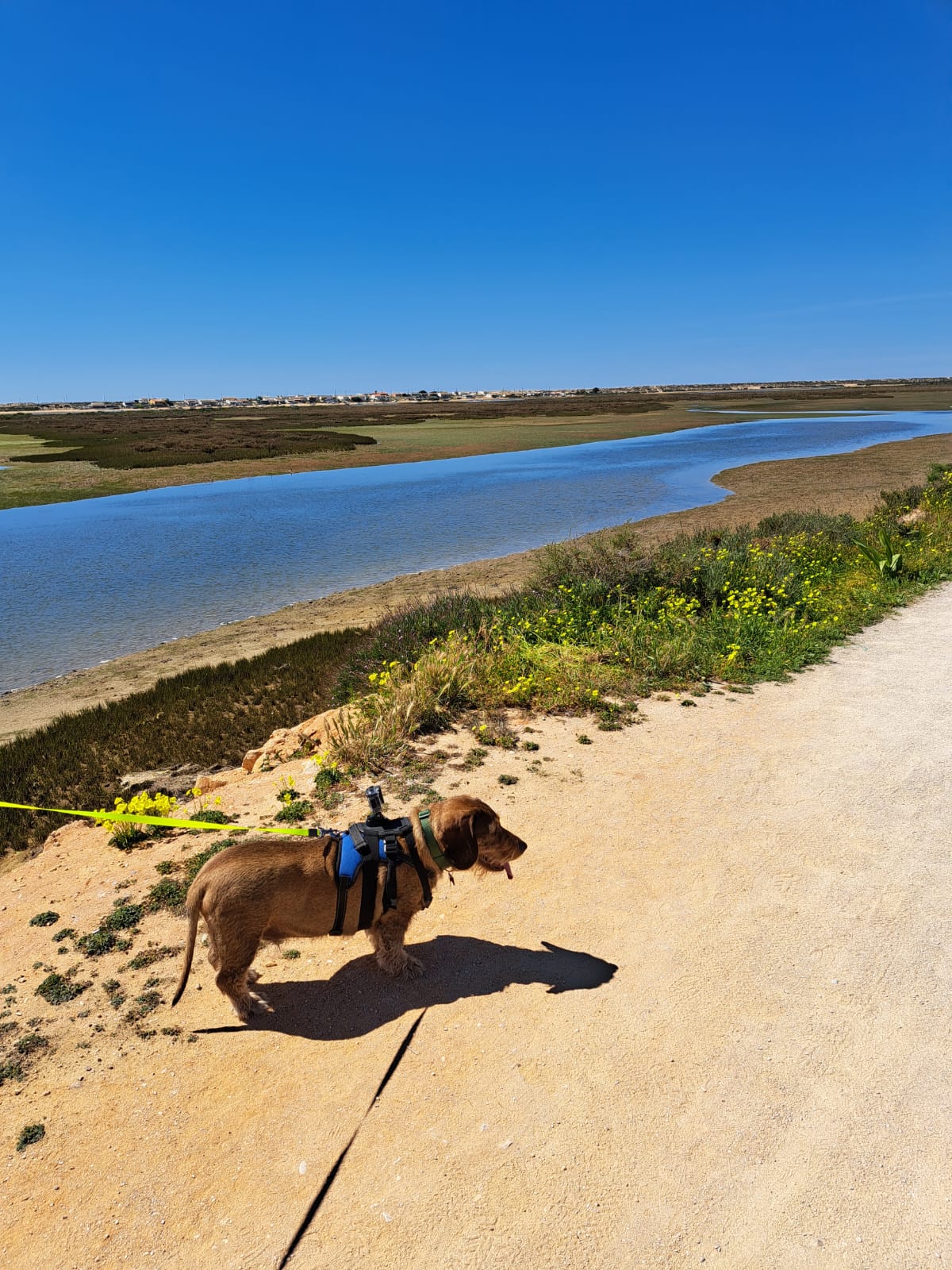
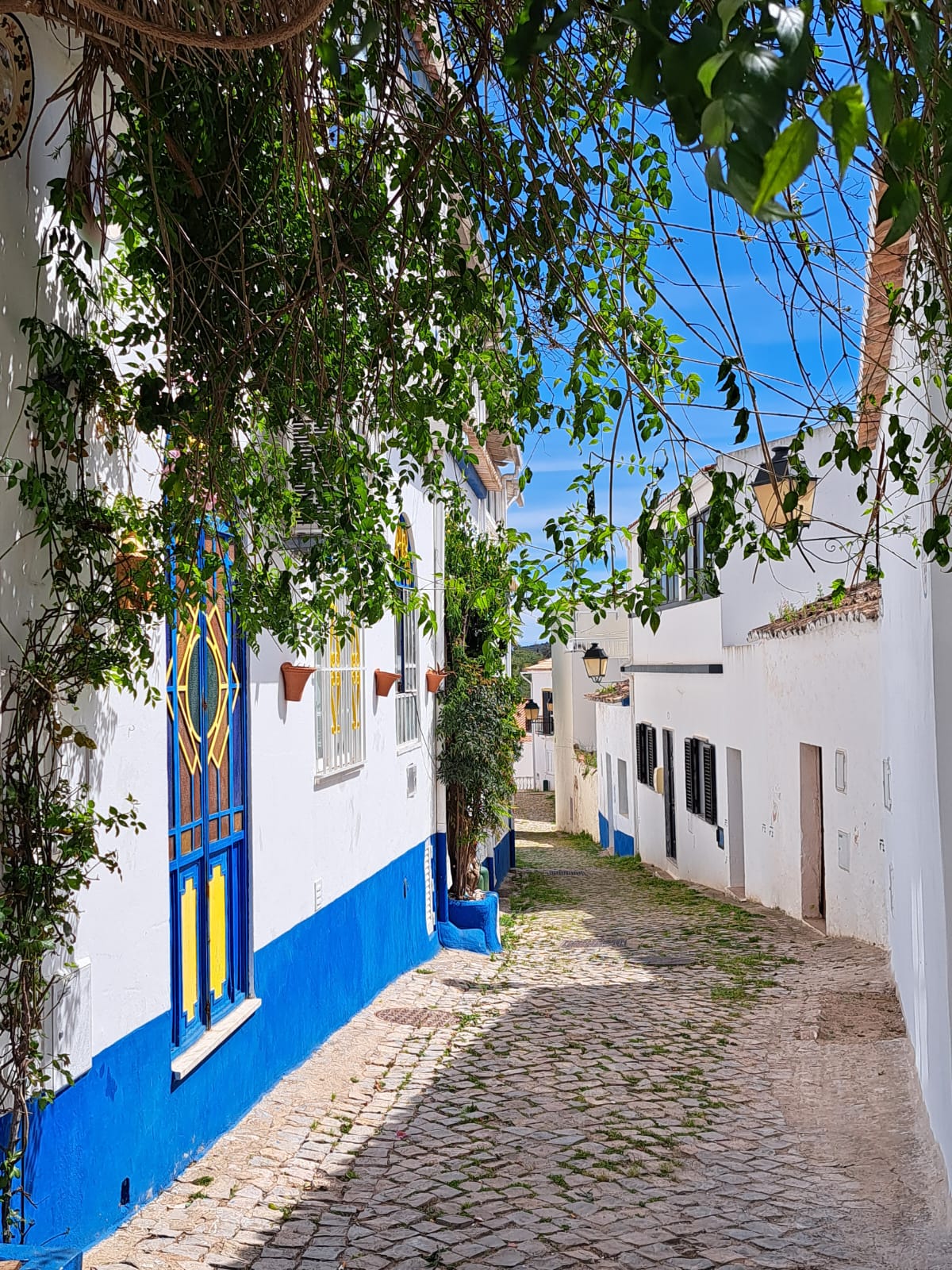
Join PG Dog on his adventure to the quaint Portuguese village of Alte. Located in the Algarve region, this traditional village is known for its whitewashed buildings and winding streets.
On this dog day out, PG explores the natural springs and take in all that the old cidade has to offer. With his GoPro, he captures all of his travels and shares them with you!
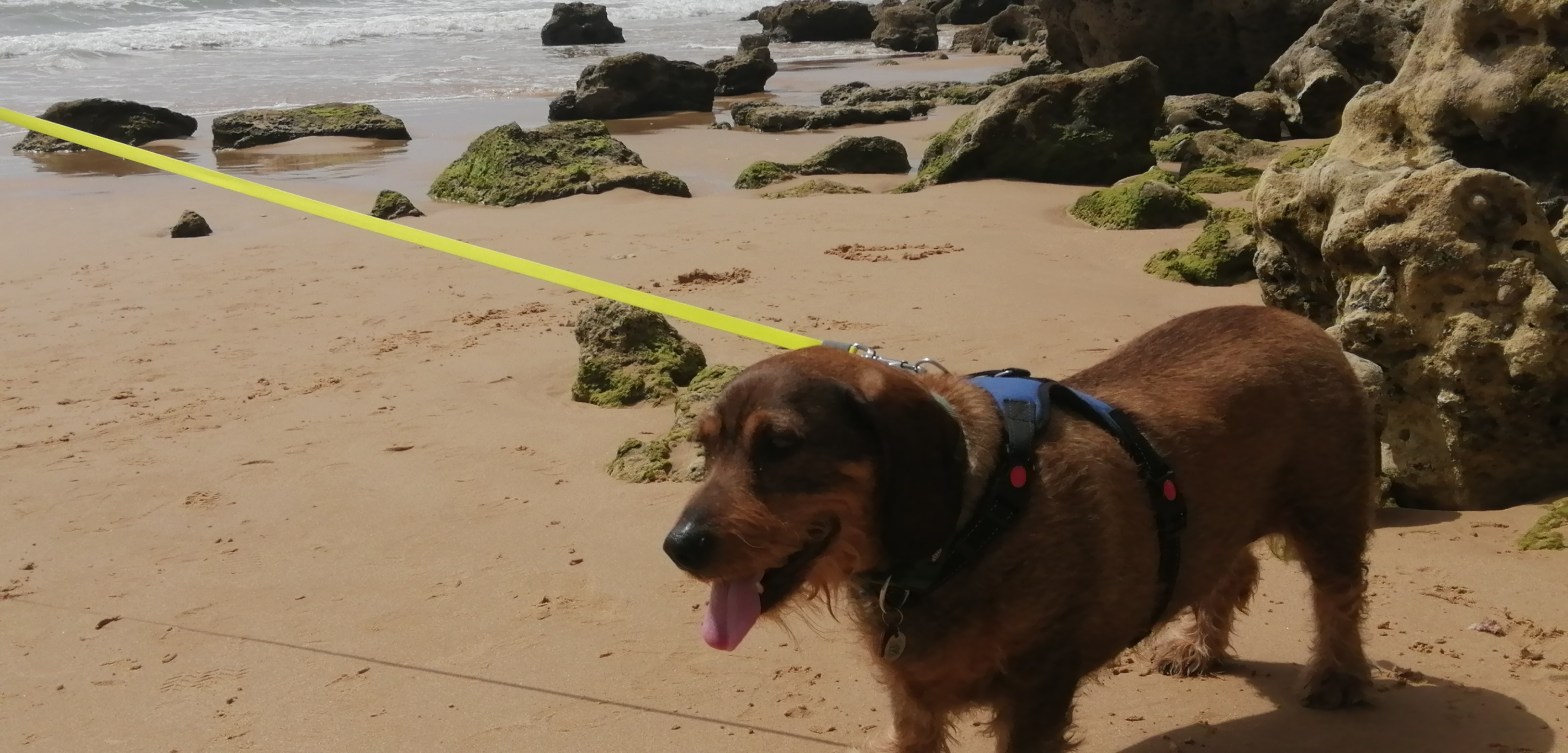
Today was a big day for little PG, our lovable pooch who just loves to explore. We took him to the sandy beaches and hidden caves of Olhas de Agua in Portugal and he just loved it!
He ran around in the sand, avoided the waves and even made some new friends along the way. He even managed to climb the stairs to see the great view from the lookout!
It was a perfect day out and we’re already planning our next adventure with PG. He’s such a happy little dog and we just can’t imagine life without him.
Well we’ve been home for a week already. Why is it that when you have a holiday there’s so much to do afterwards, you need another to recover. There’s been visits to the vet for more worming tablets (can’t wait for those!), a spa trip to the dog groomer, pay the water bill after a half hour drive to their office, cleaning and of course shopping. So today is the first day I’ve had to write anything!
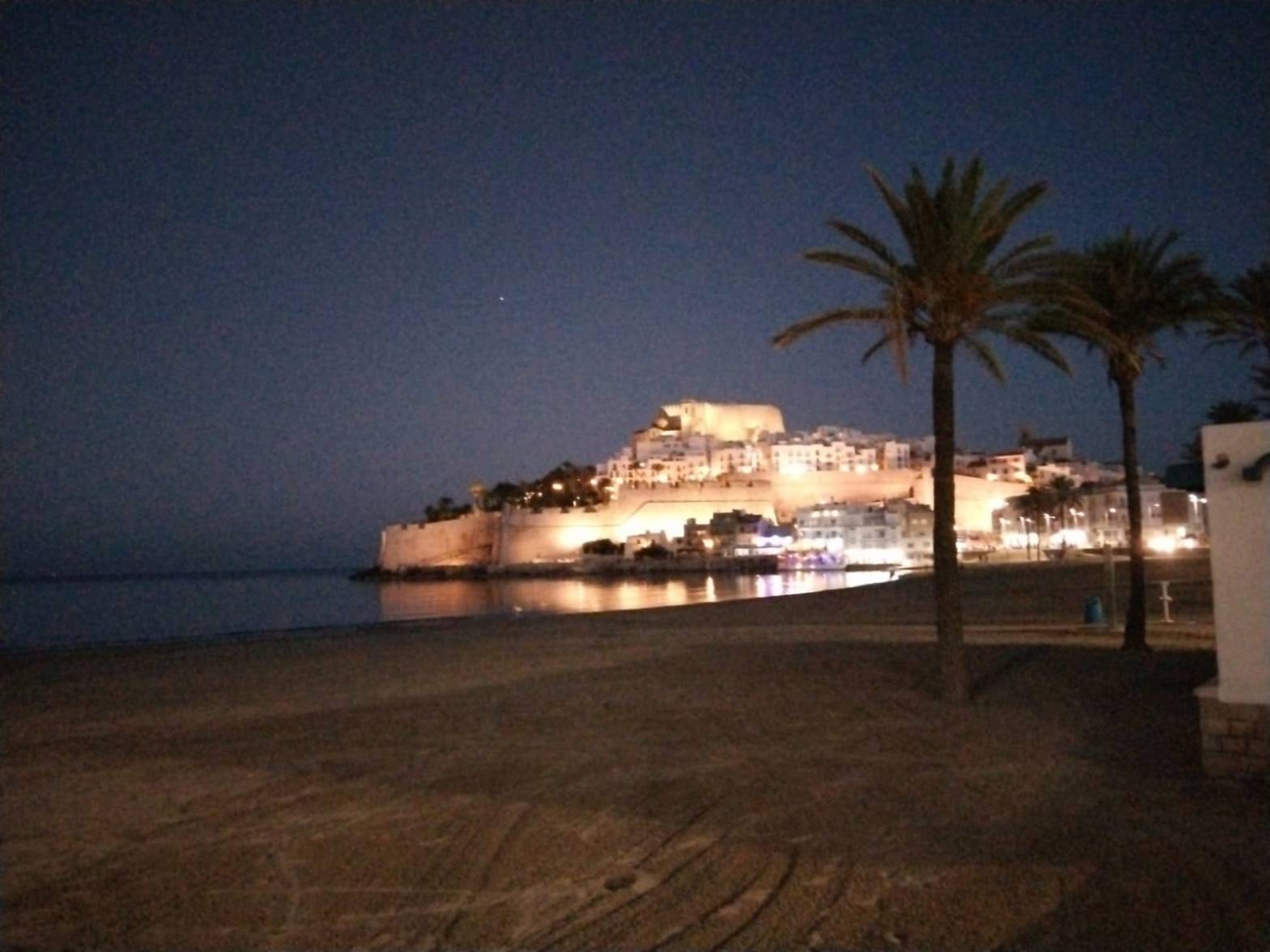
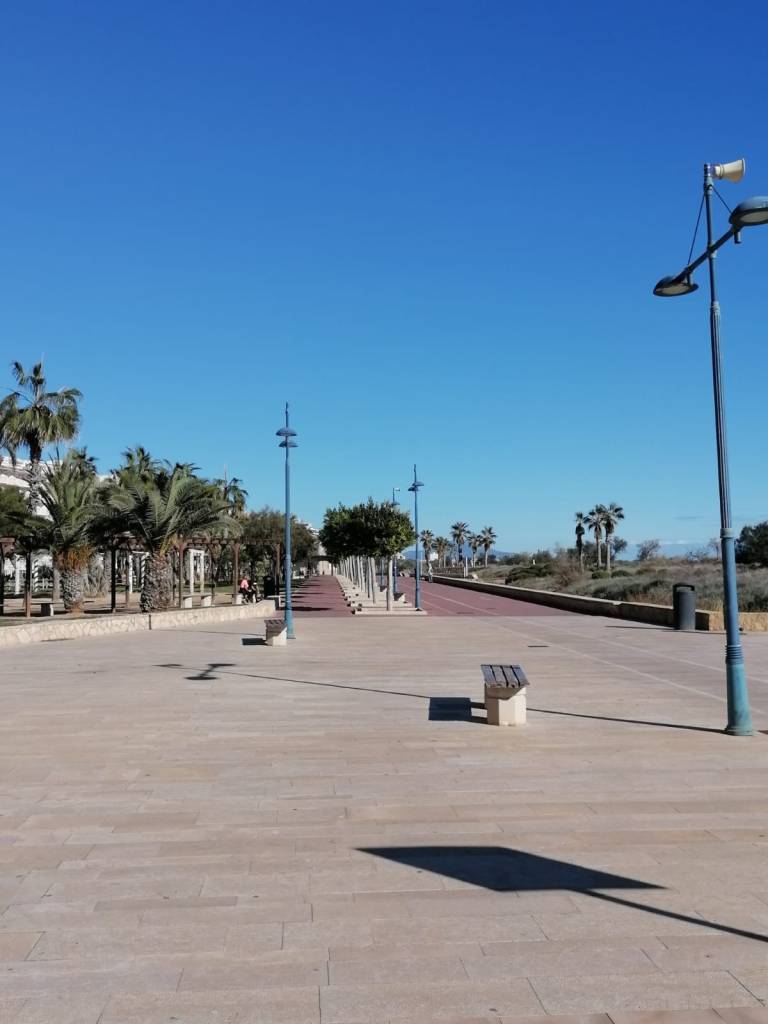
Our last week in Peniscola, that seems so long ago now, was a nice quiet one. Most of the tourists had left and many of the shops, cafés and restaurants had closed for a break before the Christmas rush. It was nice yet a bit sad at the same time. Pretty much the place was deserted everywhere we went but it did give me lots of space to run around.
Is anybody there?
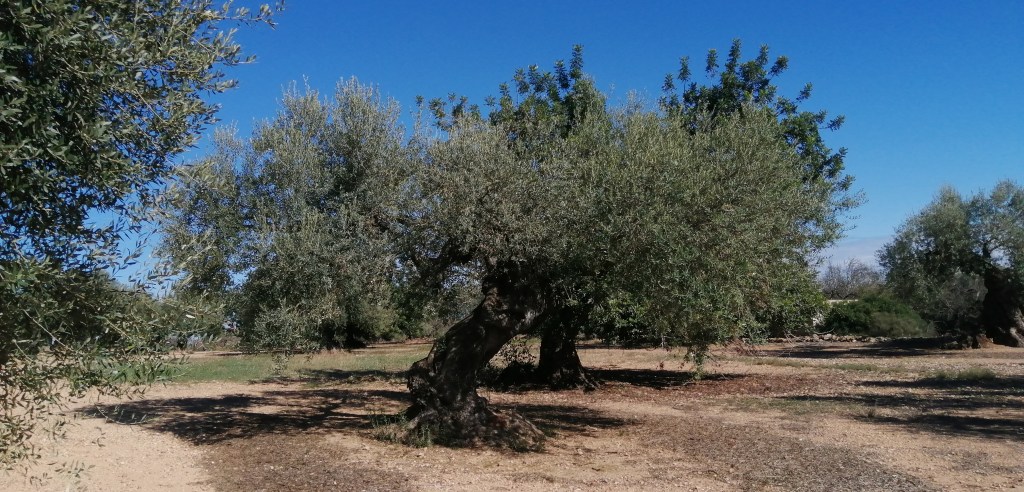
The area around Peniscola, especially in the hills, is a famous olive oil producing area. Some of the olive trees are over a thousand years old (like the ones we visited we earlier in our trip) and people even say that some of them were planted by the Romans! And they still produce olives!
About a 20 minute drive from our apartment is a little town called Triaguera. It’s been here since Roman times and many of the buildings are also mediaeval. It’s perched up on the side of the hill and the old, narrow streets are ideal for me to explore. There is a Roman festival here in the summer when everyone dresses up in Roman clothes. However the main claim to fame is the olives, that stretch away for miles below the village.
Is this a Roman olive tree?
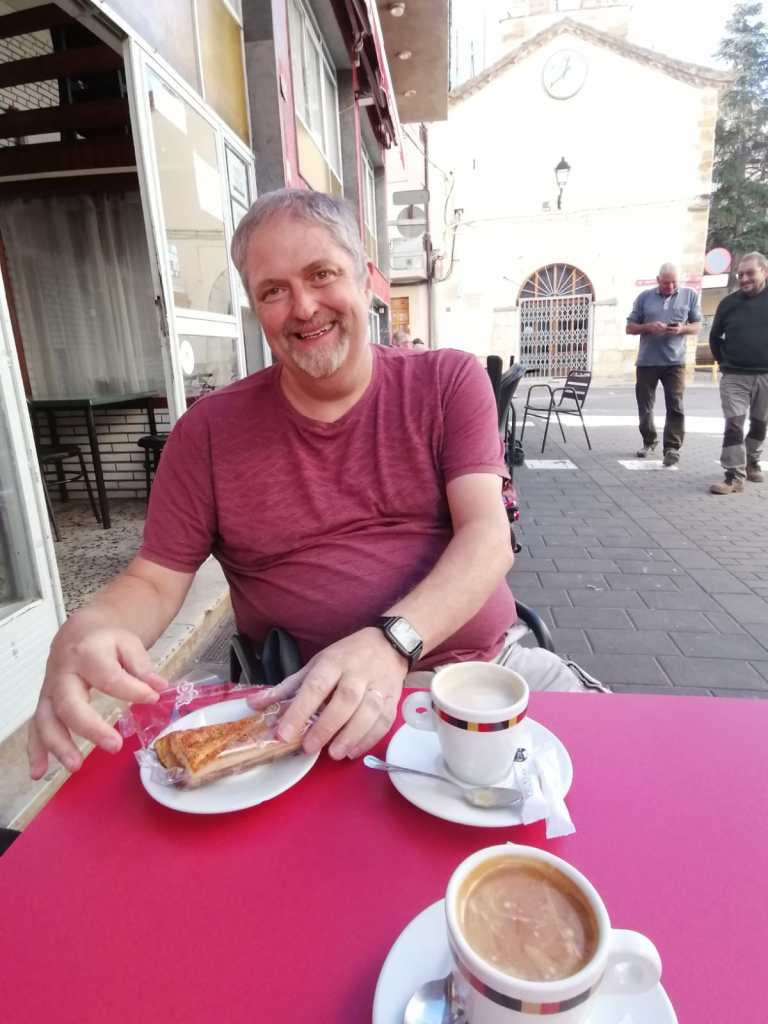
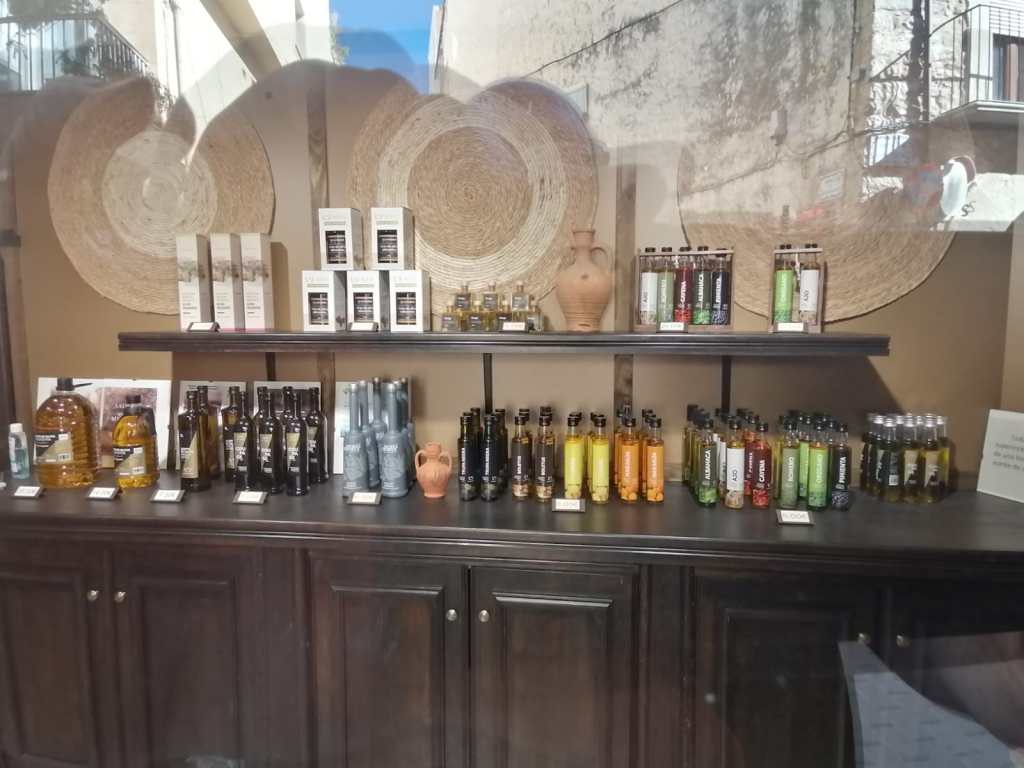
The main street stretches between two churches and on the way we pass small shops that sell delicious olive oil direct from pressing between ancient stones. Of course we have to stop to buy some. There is a telephone number on the door that you have to call then someone from the factory comes to open the shop. How antiquated, I think, but this is a town where time has stood still. We have coffee and cake while we wait. Well you have to!
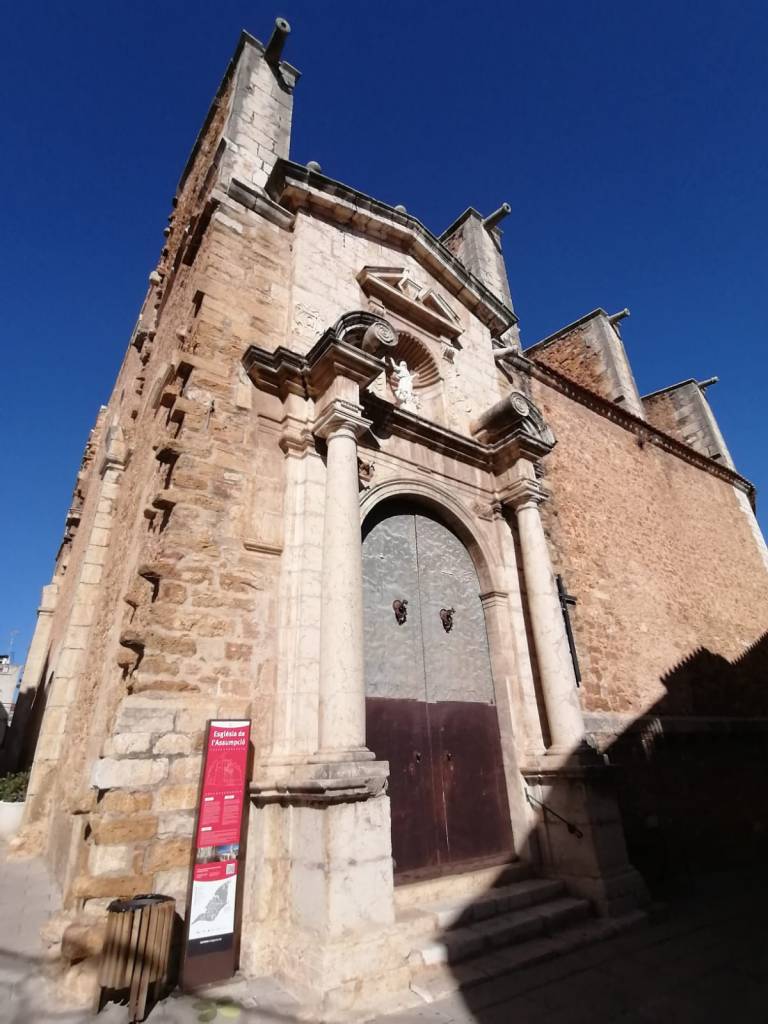
Triaguera’s mediaeval church Just passing time before the shop opens
At one o’clock the church clock starts to chime – not with a bell but a recording of the local choir singing. The tune is “Valencia”, just to remind us where we are! I think it’s lovely but Dad said that he thinks after a couple of hours of repeats, he might start to go mad!
Time for a tune!
After we collect our oil from the shop – four bottles – one with oregano, one with basil, one with mushroom and one just freshly pressed, we start our journey back to Peniscola. I’m pleased we visited Triaguera. I like olive oil and one or two teaspoons in my dinner gives me a lovely shiny coat.
Yummy olive oil!
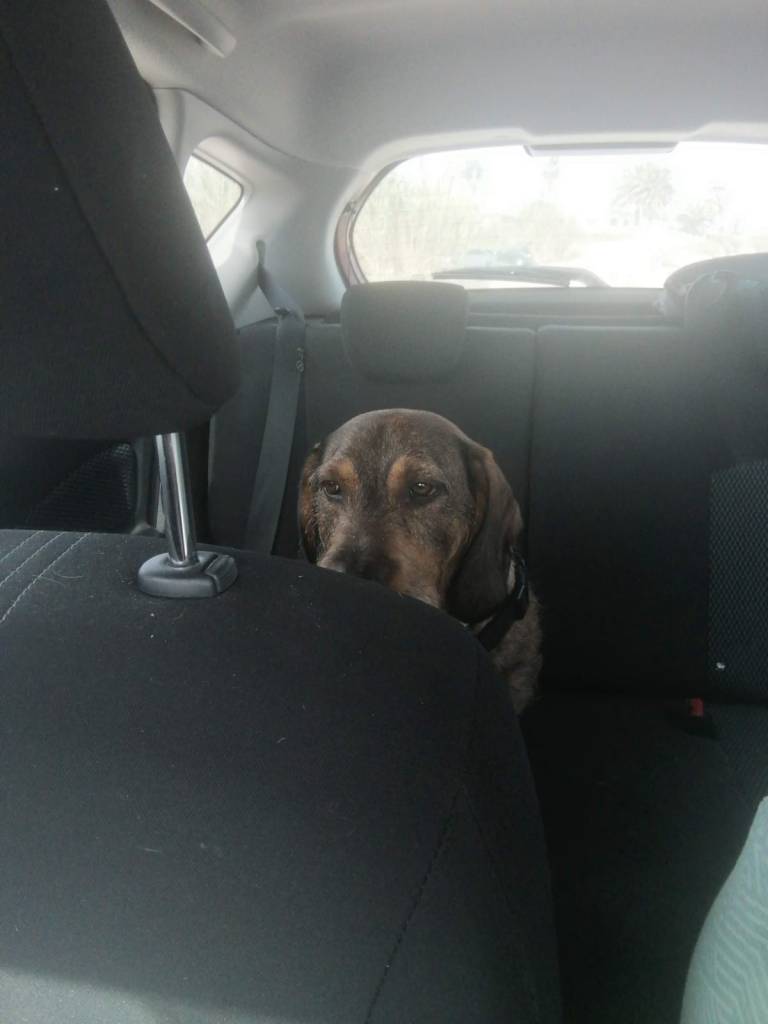
On the way back I notice that the sky is getting darker. Dad says he thinks there might be a storm. Oh no! I think, I hate those and I fall asleep on the back seat of the car until we get home. Dad was right. Just a couple of hours after we got back the storm arrived. It’s the biggest, brightest, loudest and most scary storm I have ever seen! And it lasts for hours. From our balcony the lightening surrounds us closely followed by explosive thunder. I hide in the bedroom but I can still hear the rain beating down, even through the closed blinds. The next day, thankfully, the Storm had gone but it was certainly a grand finale to our trip and we definitely went out with a bang!
Storm of my nightmares!
So after six weeks and just over 3,700km driving we’re finally home all safe and sound. It’s been a great trip. I’ve seen and experienced so many different things and enjoyed spending quality time with my Dads. My favourite places were the big beach at the Ebro river delta and our visit to Morella. Windmill tails for those. My least favourite place was the dog beach at Vinaros. No wag at all there. And would I recommend Peniscola for a holiday? One big definite bark there! With only a very few exceptions, totally dog friendly and a great place for a holiday. My top tip would be to go out of season – May or October because I think it will be very crowded in the summer and I don’t like so many people. Goodbye Peniscola – I’m going to miss you!
Now it’s time for a well earned rest. I’ve walked my little legs off and I think it’s time for another snooze. I wonder where our next adventure will be? Buenas noches amigos.
I can’t believe it’s nearly the end of our holiday already. Five weeks already gone and only a few more days left. We want to make the most of the final week so Dad said we could have one final big adventure. After lots of ideas – beach, countryside, town, castle – we decided on the nearest big city – Tarragona!
The city is about an hour and a half from Peniscola and has been standing in the same place for nearly 5000 years. Now that’s old! It’s been known by various names over the years but the Romans called it Tarraco. The modern city is full of Roman sites mixed in with more up to date buildings and is so big you can’t see everything in one day. As my legs are short and still aching from all the walking I’ve done, we decided to visit one area where we could see a bit of everything – Rambla Nova.
Rambla Nova
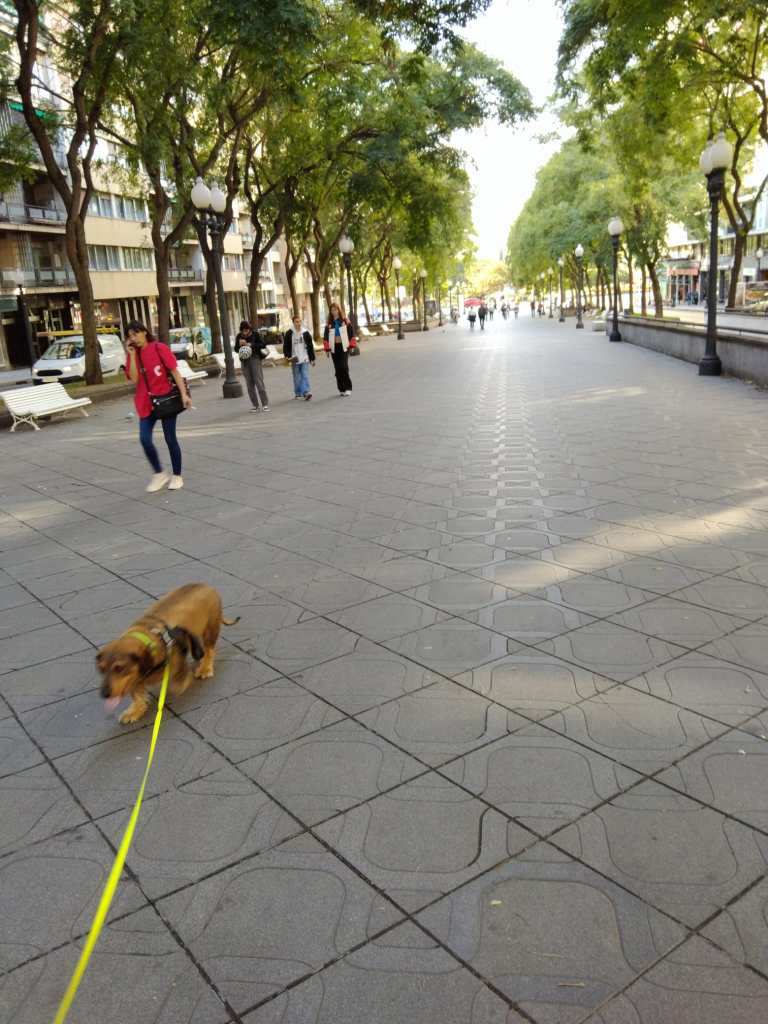
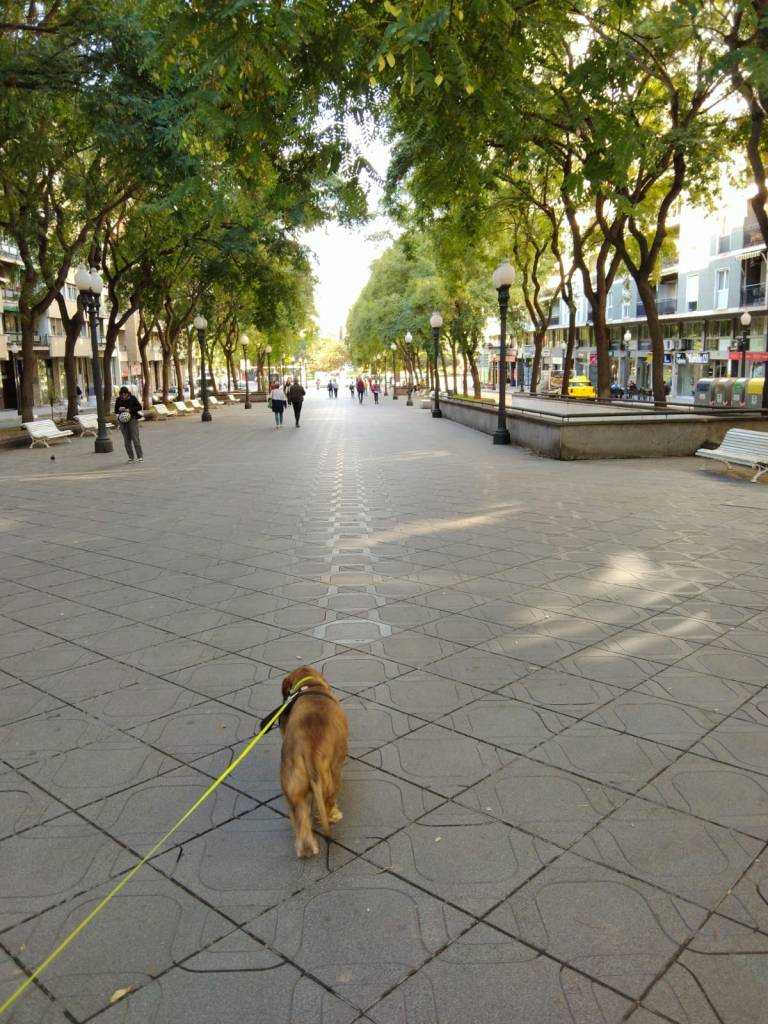
Rambla Nova is the main street in Tarragona and the place to see and be seen. It runs in a straight line from the Francolí river and Plaça Imperial at one end down to the sea at the other. At over a kilometre long it seems to me that it goes on forever! It didn’t exist until the middle of the 1800s because it was the site of the San Juan city walls.
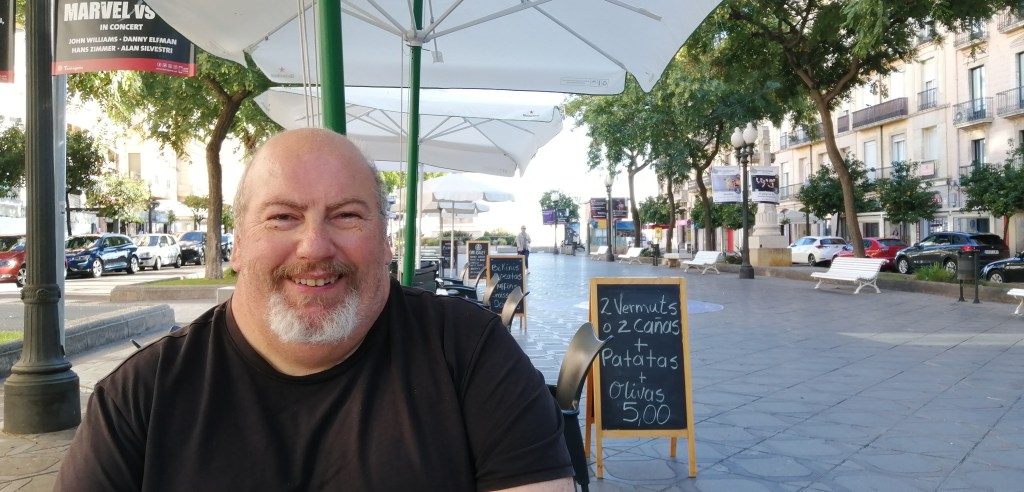
The Rambla is a dual carriageway of sorts with lots of traffic passing on both sides of the central promenade that is full of fountains, statues and monuments. There are also restaurants and cafes so plenty of places to rest my aching legs!
Time for coffee!
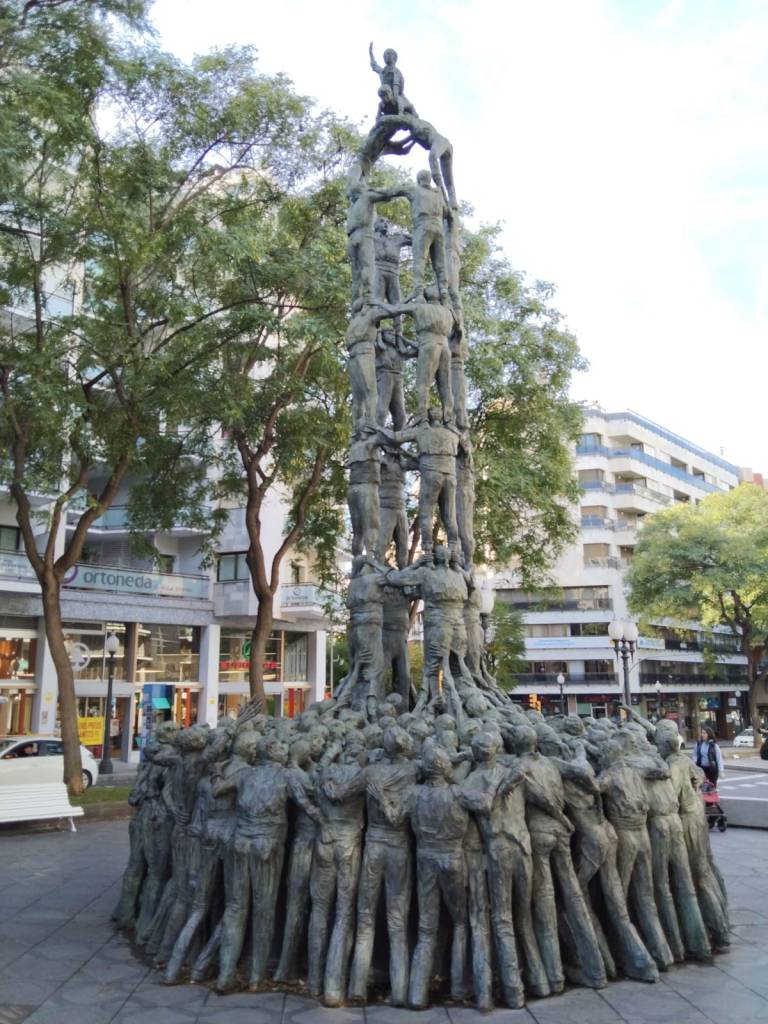
We park the car near Plaça Imperial which is now the main transport hub in the city and start our long walk towards the sea. After crossing the first road I can see a huge statue reaching up to the sky in front of me. It is the Castells monument that celebrates the human towers that are famous in Catalonia especially during the Santa Tecla festival in September. The statue reaches up 11 metres in the sky and had 222 individually cast bronze people who make up the tower. It all looks too dangerous to me and I’m glad it’s November!
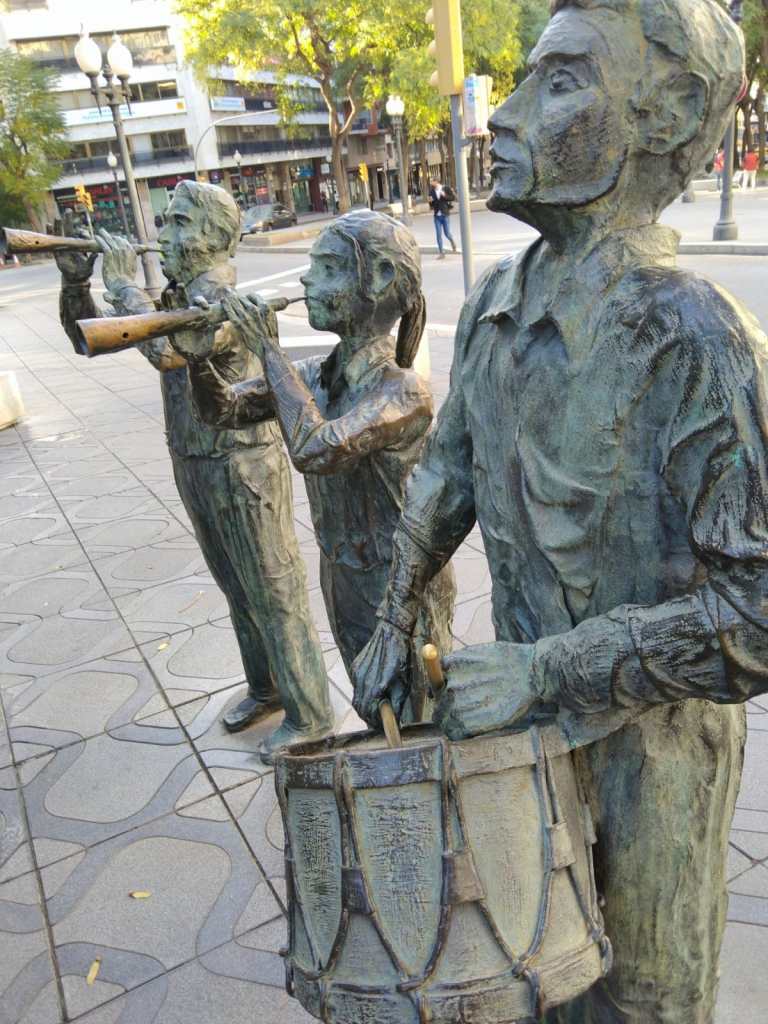
Castellers statue Music to climb by!
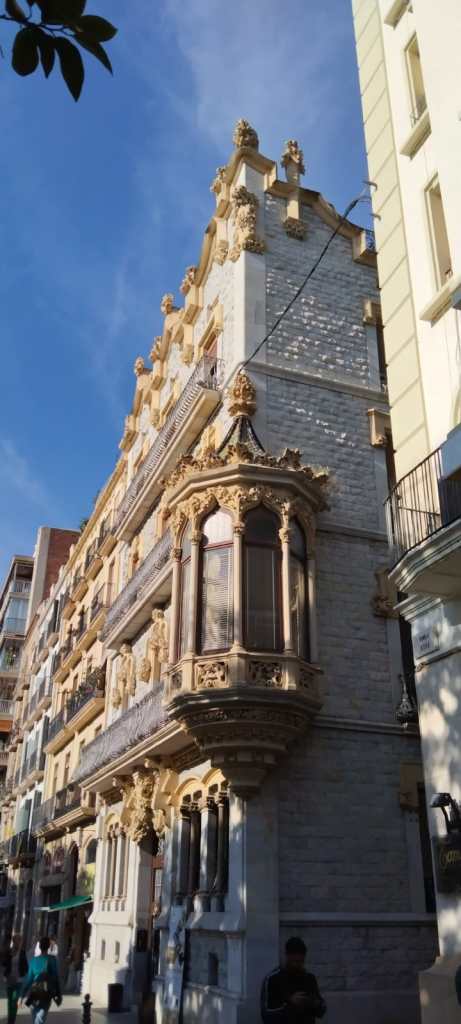
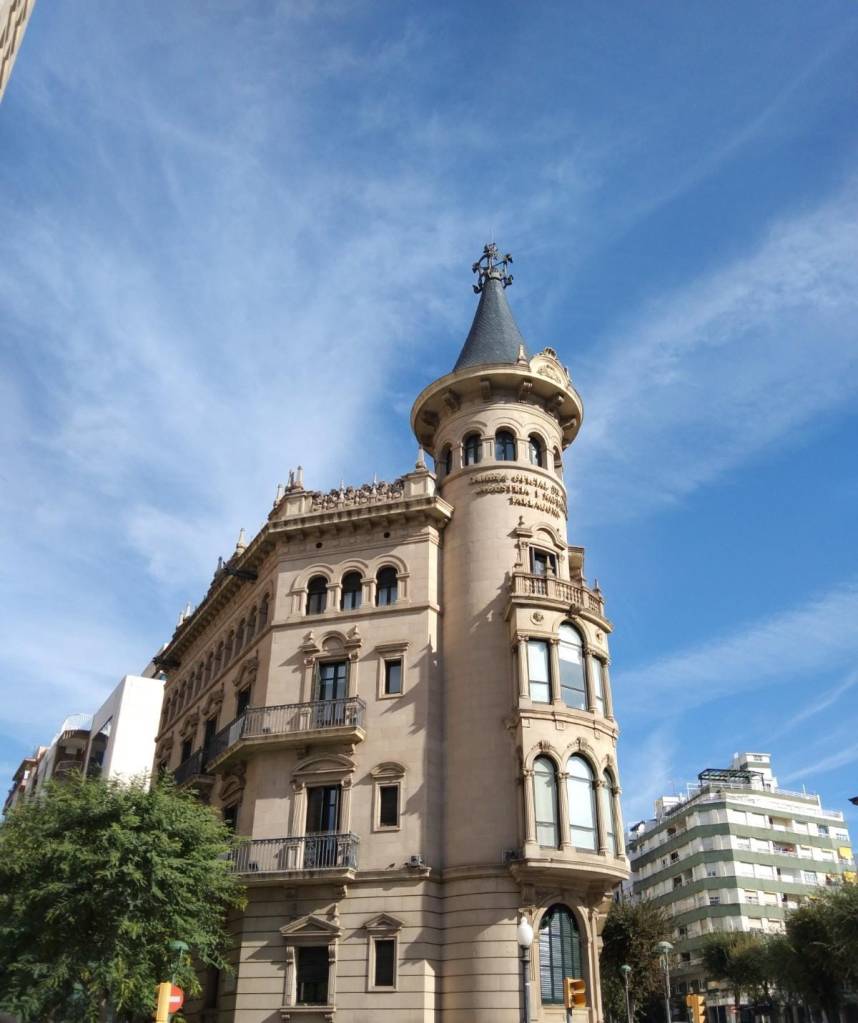
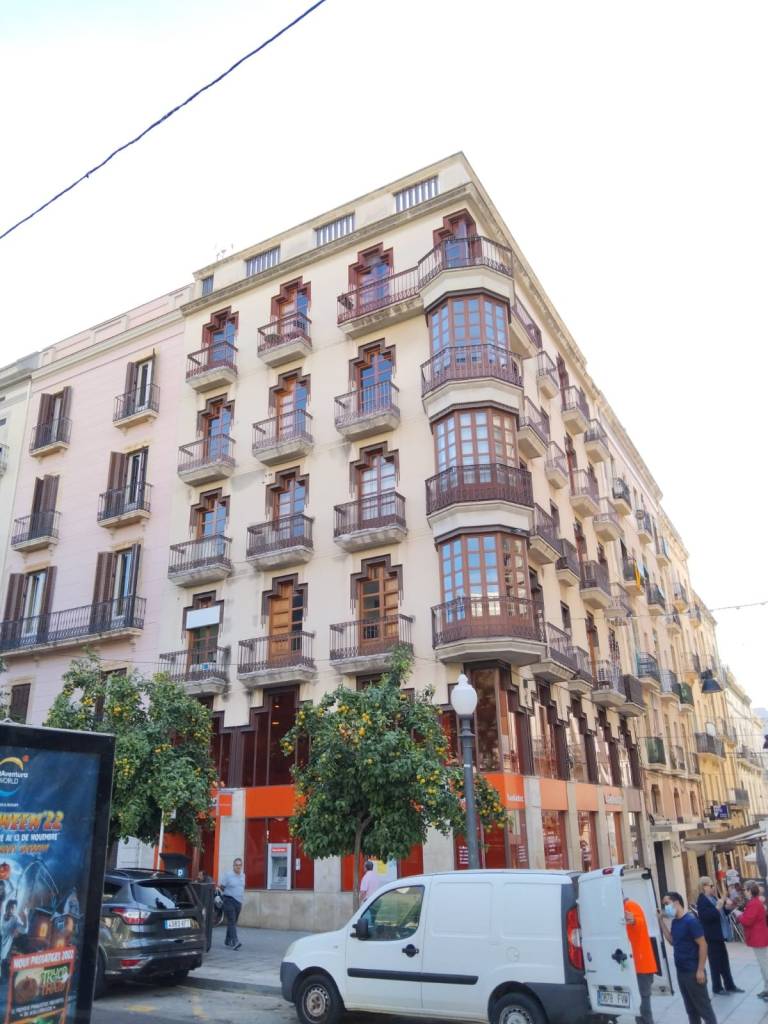
As we carry on walking I spot tall buildings on either side of the street. They don’t look Roman, I think to myself and Dad explains they are in the Catalan modernisme style again, the same we saw in Reus. I like the look of these. I always think I’m in a Poirot film set waiting for the murderer to be revealed. Some of the buildings look a bit tired (like me!) now but I can imagine how stylish they probably once were.
Modernisme on the Rambla Do the Munsters live here?Anyone seen Poirot?
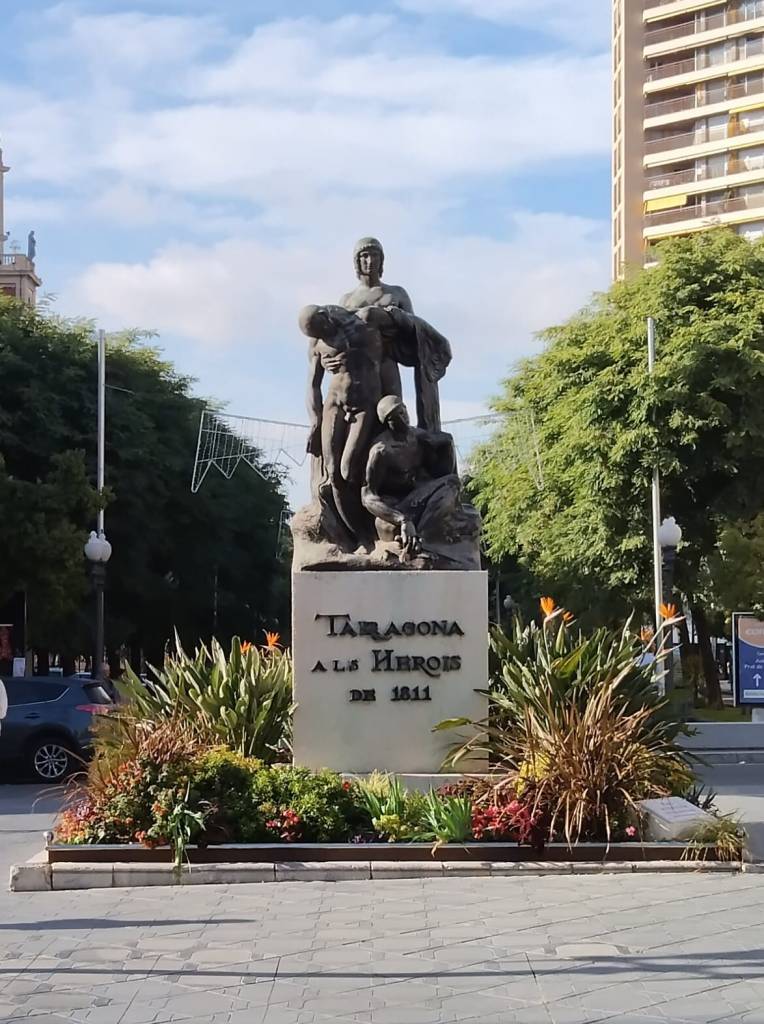
Half way down Rambla Nova is the 1811 monument. It was built to commemorate the centenary of the siege of Tarragona after it was attacked by Napoleon. When it was made back in 1911 it caused a bit of a stir because it contains naked figures – not appropriate for the time. Dad said I wasn’t allowed to look because I’m only 6 but I got a sneak peek anyway!
1811 memorial
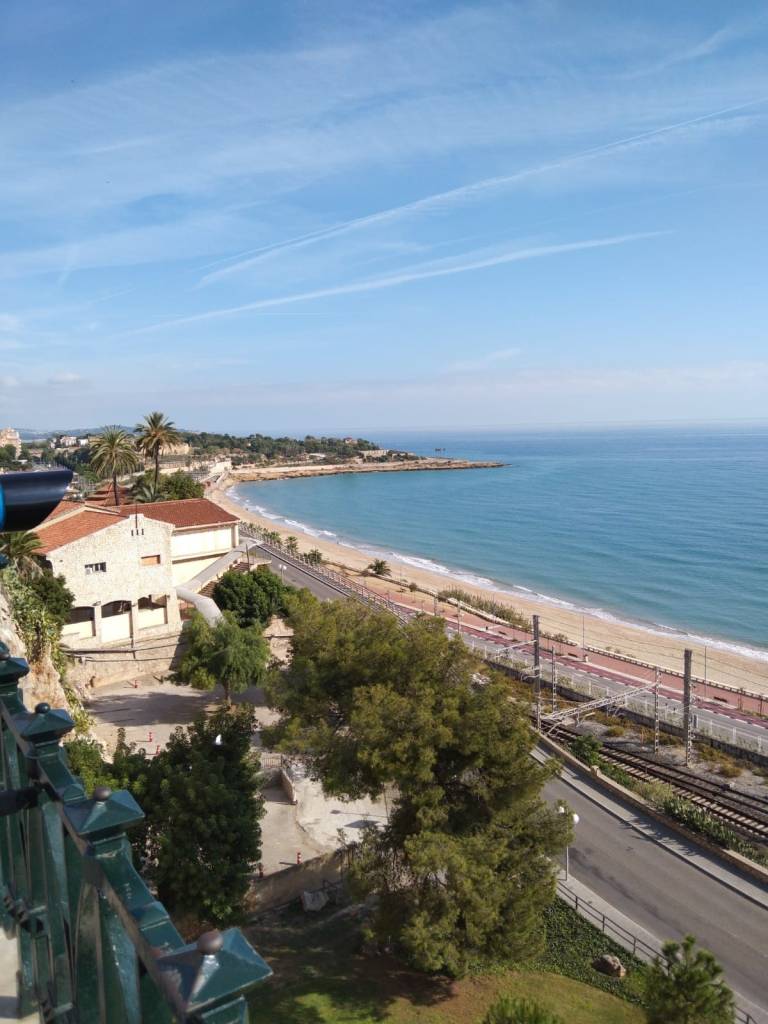
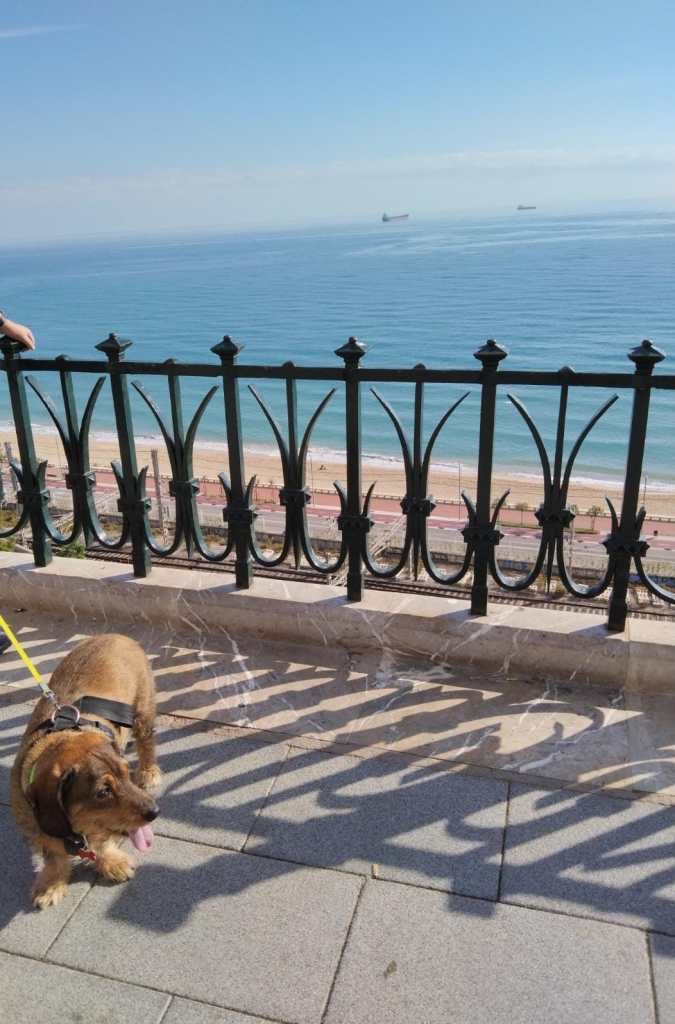
Finally we reach the end of the Rambla. It has a great viewpoint over the sea, port and to the old town. This is called the balcony of the Mediterranean and at 22 metres above the sea I can understand why. The view is great but it makes me feel dizzy looking over the edge of the cliff. I’m sure I could fall through those little railings!
Balcón del Mediterráneo Feeling a bit queasy
Back to the car now for a well earned rest I think to myself but no, Dad says there’s one more thing to see. Mene ad amphitheatrum? or should I say which way to the amphitheatre?
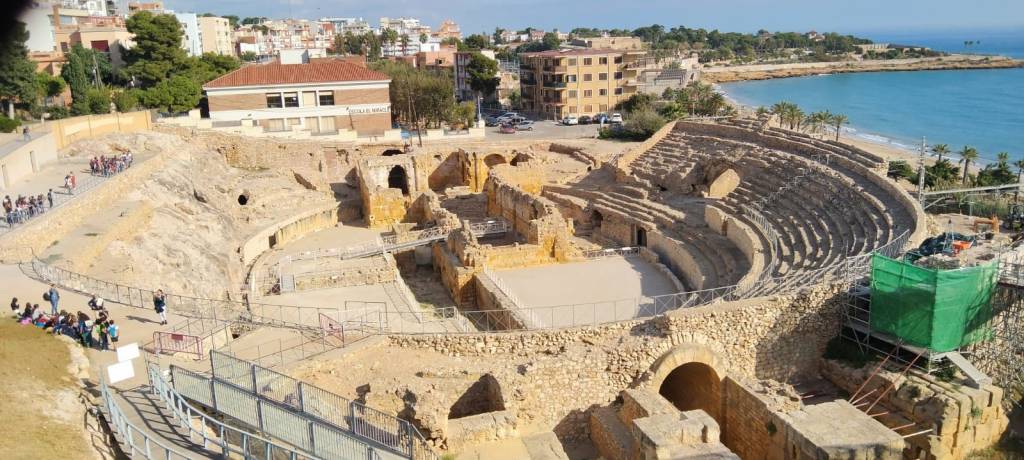
Luckily it’s just a short trot across the balcon and we can see the amphitheatre nestling between the cliffs and the sea below us. It’s a massive building and looks impressive even today. Tarragona (or Tarraco as it was known then) was on the main route along the coast of Iberia and it was the biggest and richest city on the peninsula. There was a forum, circus, walls, villas, aquaducts and of course the amphitheatre. It really was the place to be! The amphitheatre originally held 15000 people and as we look at the remaining building today, I wonder how many dogs sneaked in to watch the brave gladiators battle it out in the arena.
The amphitheatre
Can we go home now Dad? It’s been great seeing so many exciting places but I’m all holiday-ed out and I need a rest!
Isn’t it always the way – just when you think you have everything sorted, everything changes! That’s been the week I’ve had. It all started a week ago…
I like to think of myself as a creature of habit. I have my own little routines and I’m happy the way things are. Take the evenings for example. 9.30pm out for a little prebed walk followed by a piece of ham and a few biscuits before a snooze. Well last Sunday 9.30 arrived but the walk didn’t! 9.45 then 10 o’clock. I kept asking when we were going but all I was told was I needed to wait. Why I wondered. I looked at the clock but it only said 9 o’clock but my belly said 10! Then Dad explained. The clocks had all been changed on Saturday night ready for the winter. Noone told me and I hadn’t changed my clock! So first change of the week!
Time for a snack yet?
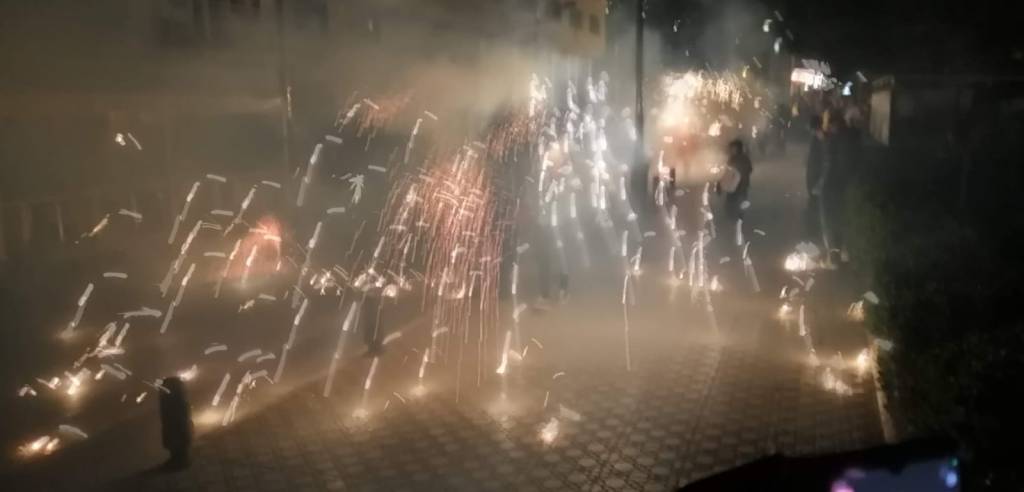
As October changes to November, winter starts to arrive. I’m not that keen on Halloween. We always watch scary films and then they expect me to go for a walk in the dark! Yeah right! It’s the nearest tree and I’m done! This year was a bit different too because Dads were going to go into Peniscola for an hour to watch a TERRORific parade. I decided to stop at home because you can’t have a fiesta in Spain without fireworks and I hate them! That was a good choice because the parade was full of them to chase the evil spirits away! I prefer a sleep on a comfy bed.
A terrorific parade!
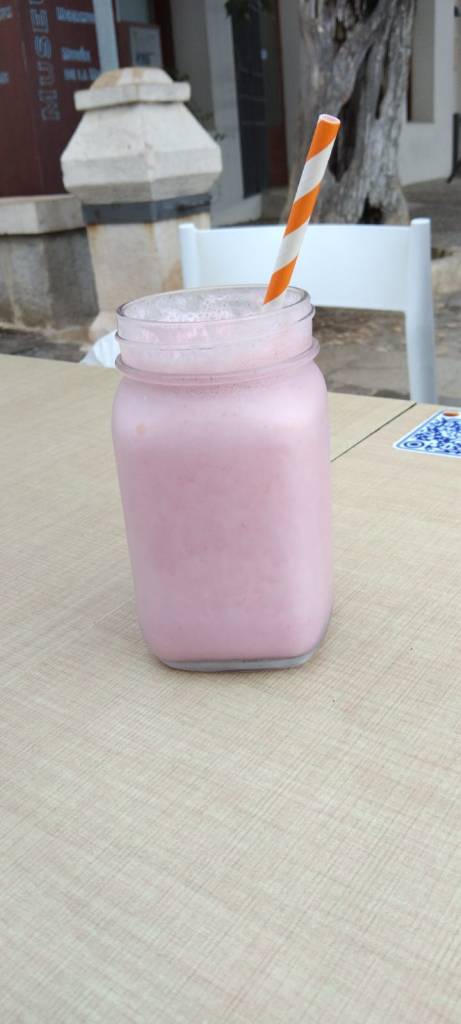
The first of November is a national holiday here (like in most Roman Catholic countries). El día del muertes or Day of the dead is a big celebration when everyone visits the graves of their ancestors to celebrate their lives. It should be cold – I remember going in the snow in Hungary – but this year it was 31C! And the town was packed! Well when in Rome… so we joined in the celebration with an ice cream from the local shop!
Yummy batido with ice cream!
From the second of November it was all change again! The weather was cold, dark and we had a storm warning with 3m waves and 80kmh wind! All the tourists had left and everything, and I do mean everything, had closed for the season. The hotels, our favourite cafes and restaurants and even the local supermarket! What a change I thought as I remembered the crowds of people on the beach just a few days before.
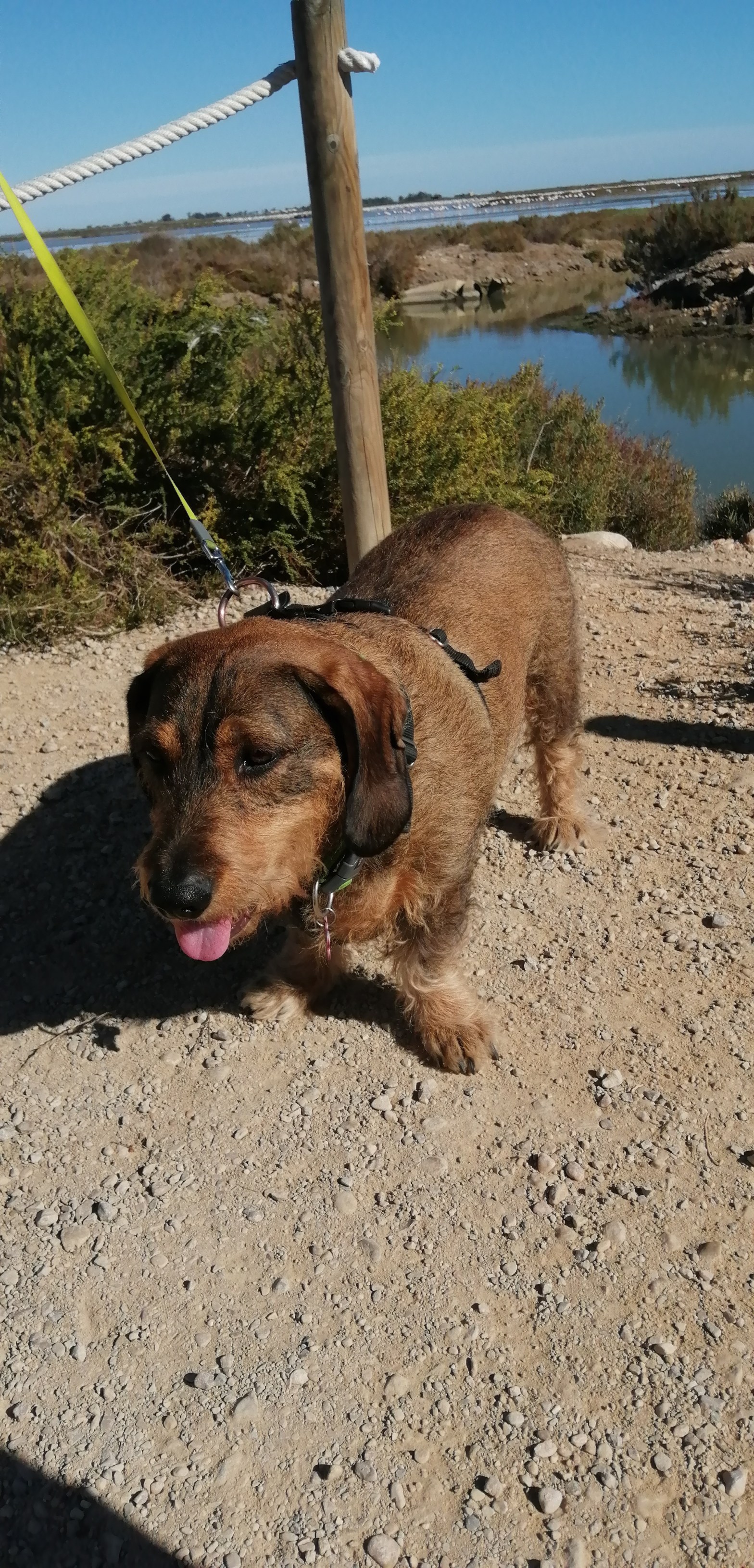
We had planned to have a few quiet days because of the bad weather but, surprise again, it was calm, warm and sunny when we woke up! Dad had found a nature reserve nearby that is advertised as being dog friendly. Now that’s more like it, I thought, so we jumped in the car and were soon on our way.
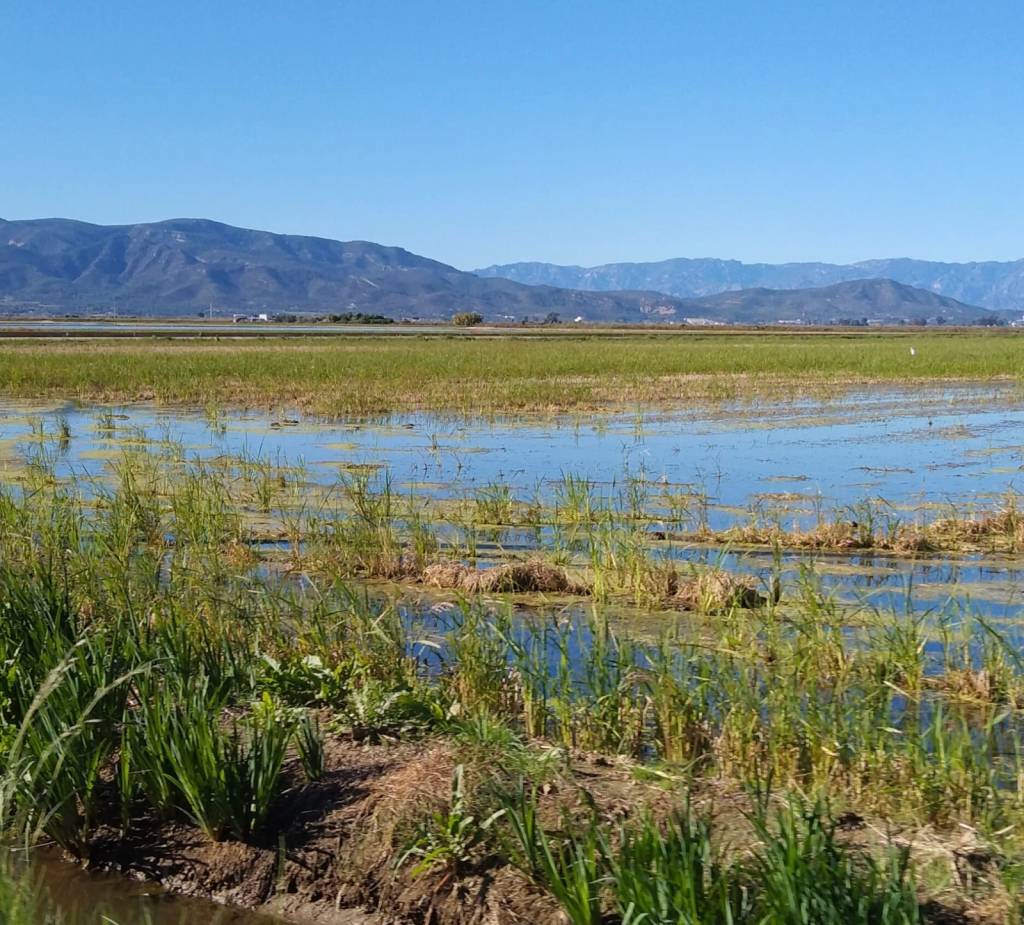
The Ebro river delta is about 30 minutes from Peniscola and we were soon turning off the motorway to reach the reserve. This is a huge wetlands area, the second biggest in Europe and is home to over 400 different types of birds. Dad said we could stop at some of the observation spots if I promised to be quiet.
First view of the Ebro wetlands
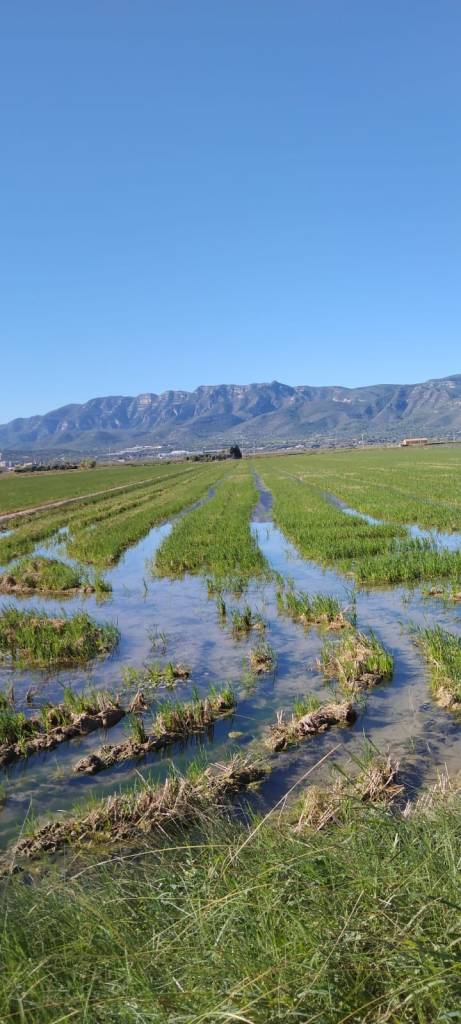
The road was very narrow – just big enough for our car and was risen up above the wetlands which stretched for miles on either side of us. The flooded fields were filled with what looked like tall green grass but Dad said that it was rice! Apparently rice doesn’t need to grow in water but it doesn’t hurt it and the flooded fields stop weeds from growing and the rice from getting pests. It’s a huge industry here and they grow over 425,000 tonnes a year!
This is where the rice for dinner comes from
Dad makes my dog food for me using meat, vegetables, pumpkin and, yep, rice. So how many dinners will all that rice make me? Let’s see … One 1 kilo bag makes 4 days of food for me. There’s 1000kg in a tonne so 425,000 tonnes makes …. too much for me to eat!
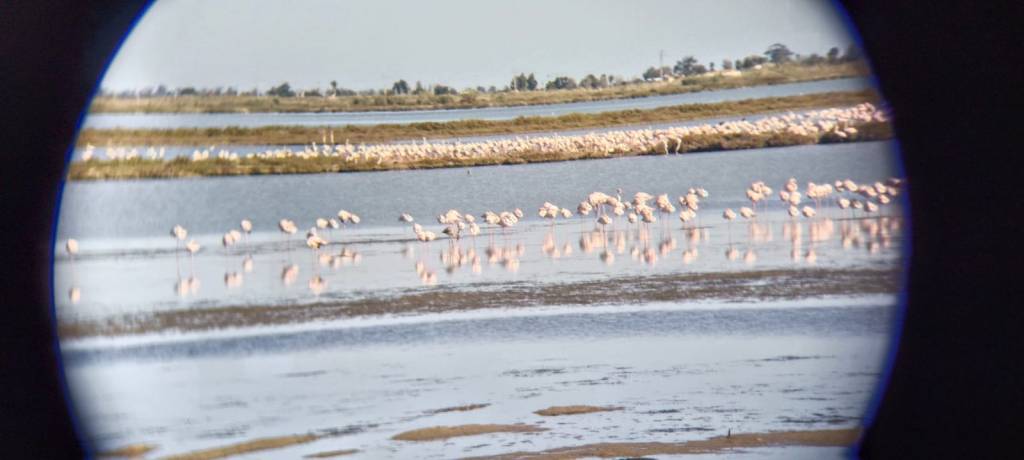
After a while we reach one of the observation platforms and I promise to be quiet so I can go and see the birds. I see a few small ones nearby and think they look interesting but then I spot something pink a bit farther away. Then I see more and more pink. Wow, I think look at all those flamingos! Now we have flamingos living near us back in Seville but not this many. Dad says let’s play a game and count how many there are. One, two, three, four, five, six…. That’s as high as I can count because I’m only six but there are so many I can’t imagine how many. In fact Dad says there are so many that the last time they were able to count them was in 2017 and there were 2700 pairs of flamingos! Apparently this is the only place in Catalonia where they breed so who knows how many there are now!
Look at all those flamingos
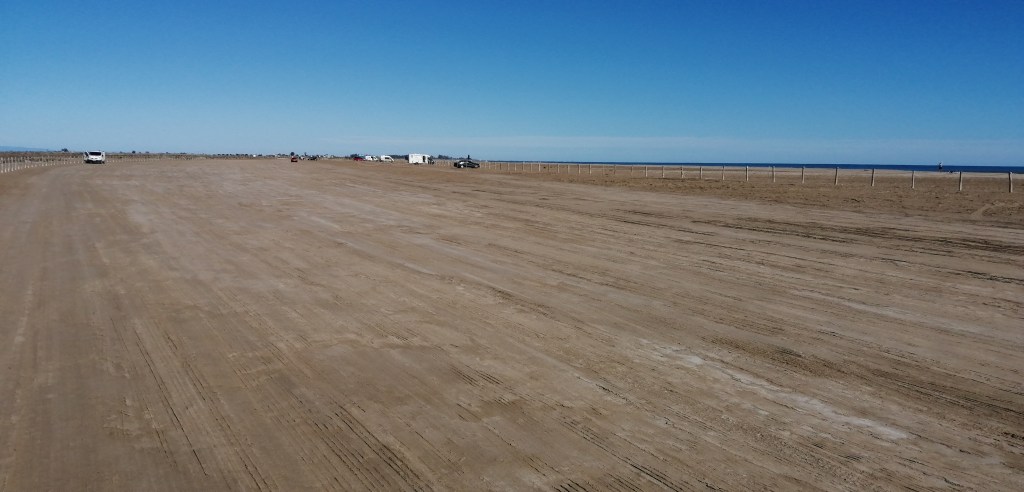
We decide to finish our visit with a trip to the beach, just a little bit farther away. Oh! I think as we arrive at the massive car park, it’s sand …. again! Don’t worry, Dad says we won’t get stuck, it’s been prepared to drive on!
No we didn’t get stuck this time!
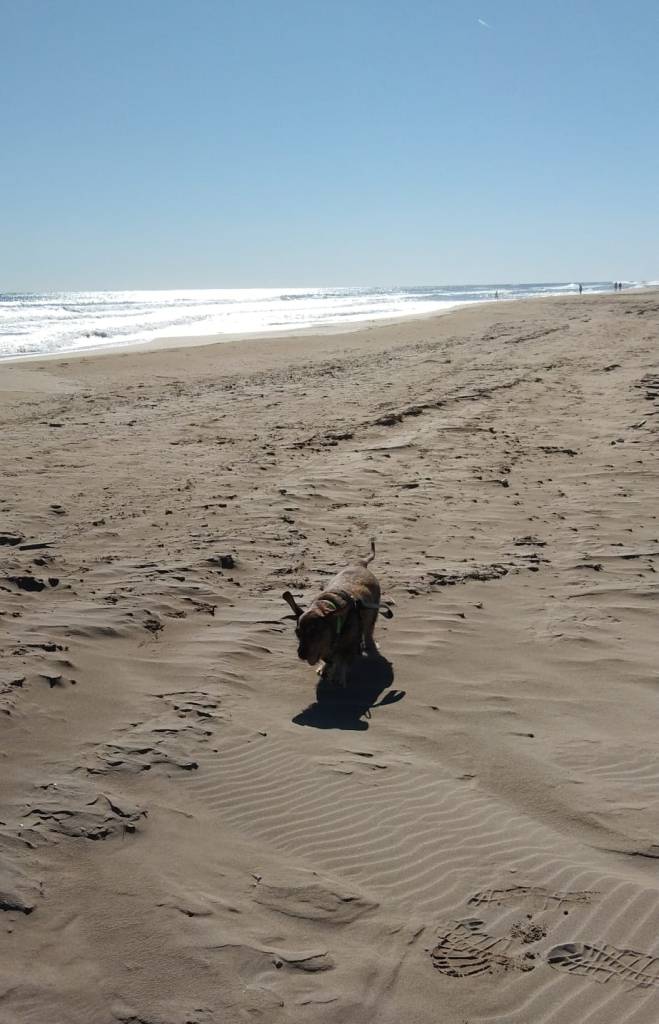
The beach itself is wide and long, so long that I can’t see the end of it. The small waves splash onto the beach and I’m allowed off my leash! Yeah so much to explore. I sniff, dig and run all while avoiding the waves! What a lucky dog I am!
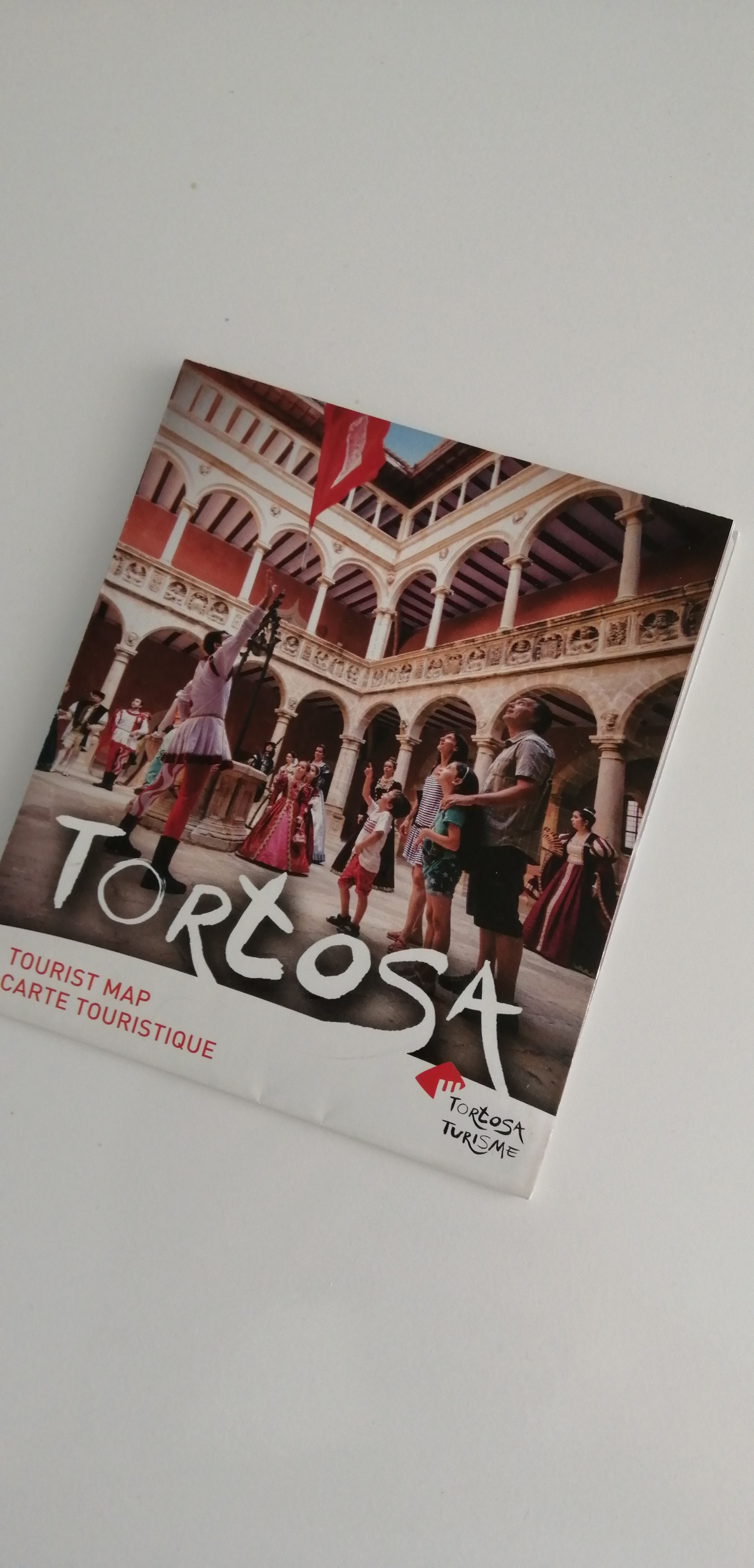
A few days ago I was just sniffing around, like I usually do, and I found an old leaflet hidden under a cupboard. With a lot of licking and pawing I managed to get it out. Now I admit I’m not that good at reading but I could see the letters “T O R T …”. Great I thought – a recipe. It starts with TORT so maybe it’s a tortilla! I love those eggy omelettes! Or maybe some type of torta! Who doesn’t like cake! So I took the recipe to Dad and to my disappointment it was a leaflet for the local city – Tortosa and not food at all! Dad suggested we go to explore and the next day we were all in the car on the way to the city.
A recipe or a place?
The journey was about 40 minutes and we were soon turning off the motorway towards the city centre. The road twists and turns past a canal but I can’t see any boats and in fact the bridges passing over the water only just skim the top. I ask why they built it here like that. Dad points to the fields that stretch out on either side of the canal but are lower than the banks. What’s that growing I wonder as I spot small green grassy looking plants sticking out of flooded fields. It’s rice! Did we take a wrong turn somewhere? I thought rice only grew in China but no this is Spanish rice!
Finally we reach the city centre. We park near the river. It’s very busy and traffic whizzes past. I’m not so keen but Dad says it’s going to be quieter soon. Tortosa is an ancient place and walking through the streets soon turns into something from Harry Potter!
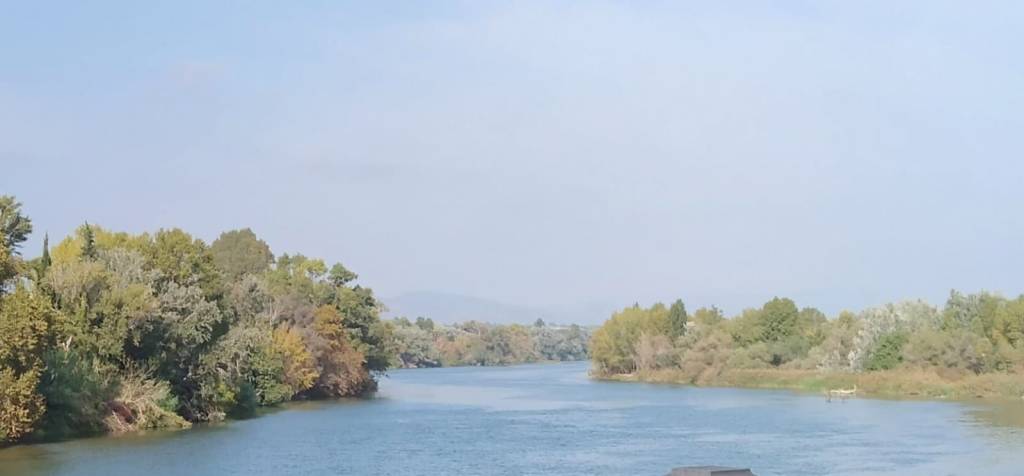
We start at the river that has been at the heart of the town from its beginnings back in prehistoric times. I can just see it over the wall, stretching into the distance. It’s wide and on both sides I can see the lush green trees, something that’s rare here as the only rivers we have seen have been dried up and dusty. Tortosa is just 12 metres above sea level and I wonder if the town has ever been flooded. I’d prefer to be a bit higher, just in case!
River Ebro
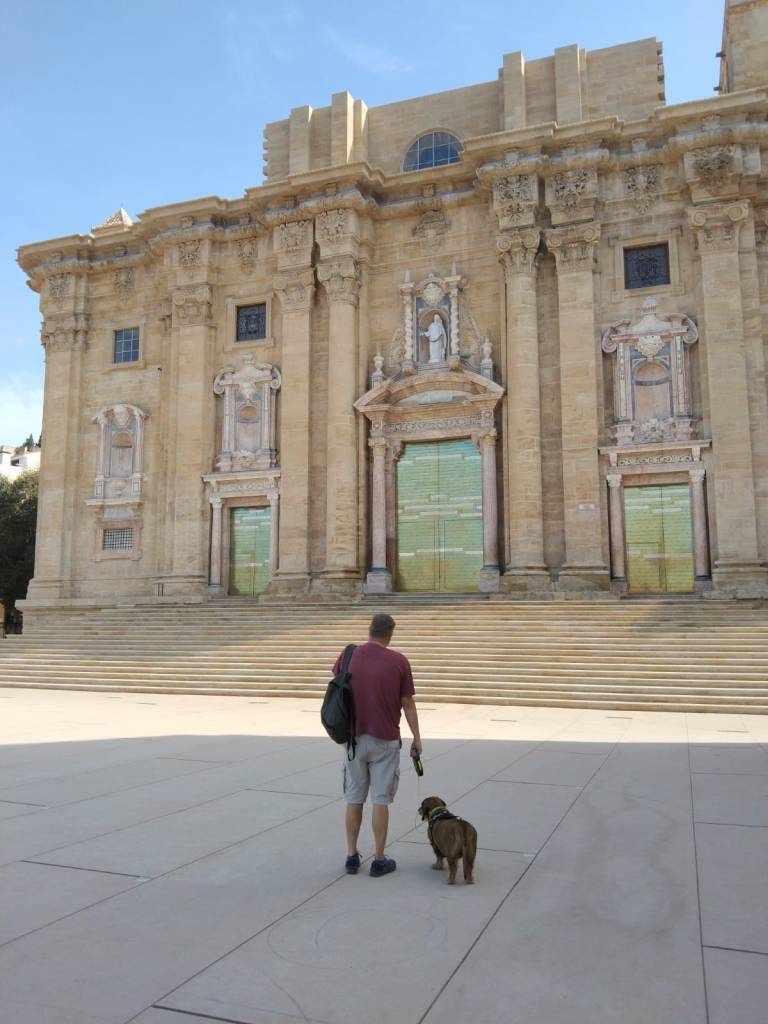
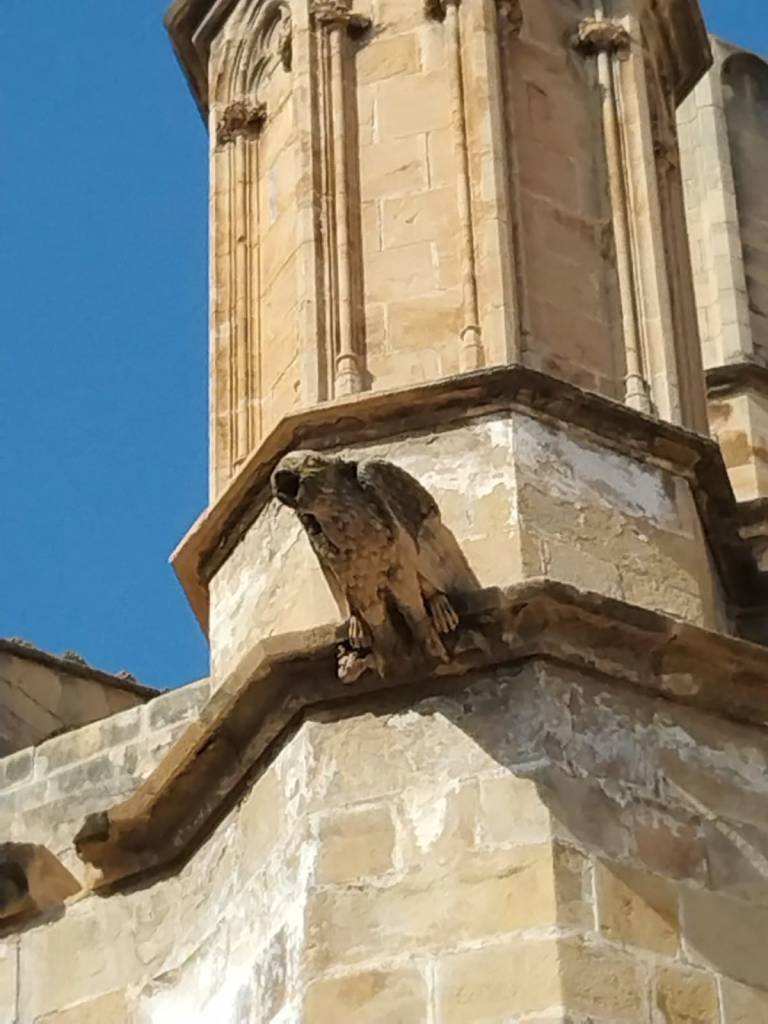
We soon turn away from the river into a maze of little streets and then just as quickly we arrive in the huge square in front of the ancient cathedral. It is enormous and I can hardly see the top. The massive metal looking doors standing firm under the finely decorated arches. Dad says it’s been here since the 14th century and that makes it older than him! The carved water spouts high up on the roof – I think they’re called gargoyles – scare me a bit and they remind me of a picture I once saw of Notre Dame in Paris that had something similar.
Cathedral Square Scary gargoyles
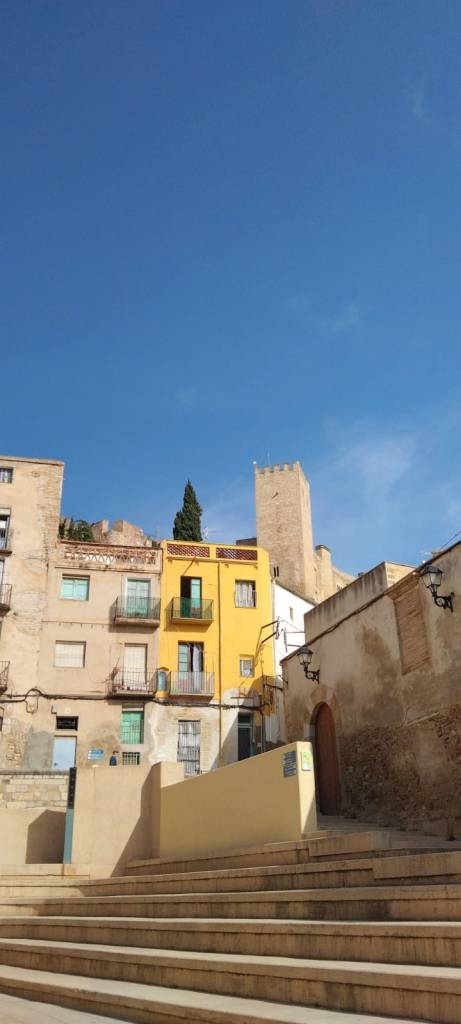
High up on the hill above us I can just see the castle that has been protecting the locals since the Moorish invasions back 1500 years ago. The thick walls make me feel a bit safer as we pass under the archway and into the old medieval part of town.
The castle on the hillStill protecting the city
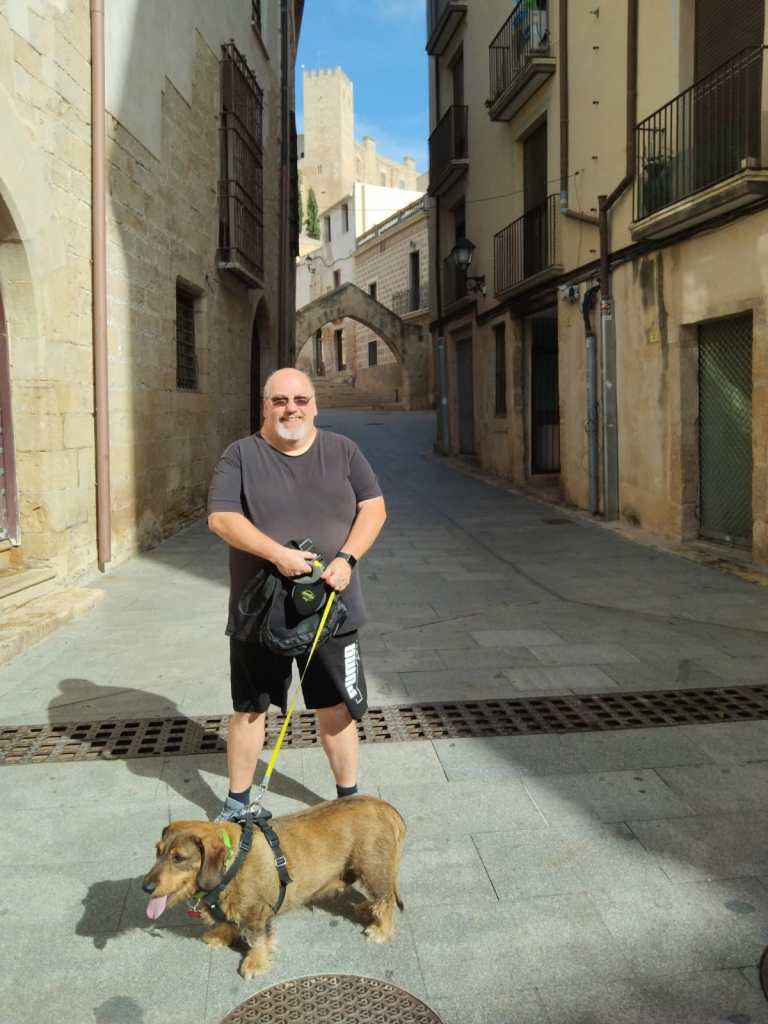
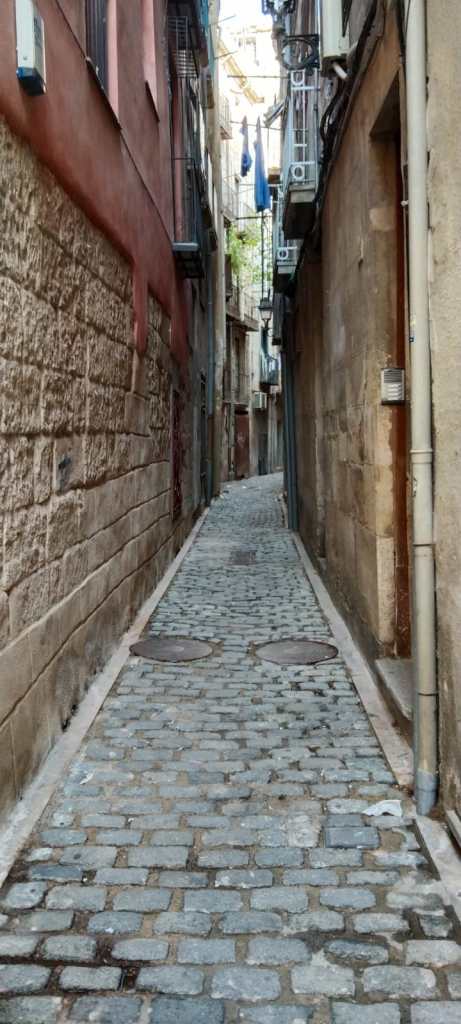
The streets are really narrow and the buildings reach up to the sky. Narrow fronted with a small doorway and usually only one window, most tower above us to three or four floors. People still live here in these streets that are hardly wide enough for a donkey and cart to pass through. I can see washing drying from the little balconies and I’m sure that everyone knows their neighbours as you can almost hold hands across the street. Harry Potter and his friends from Diagon Alley would surely be at home here!
Is this Diagon Alley?
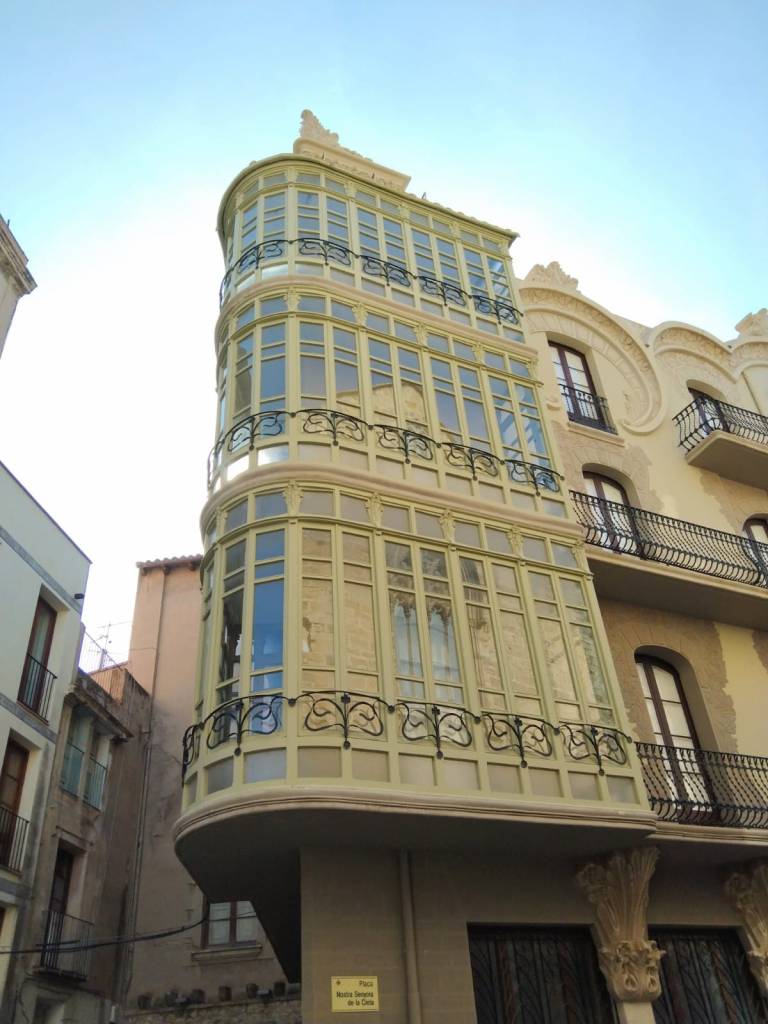
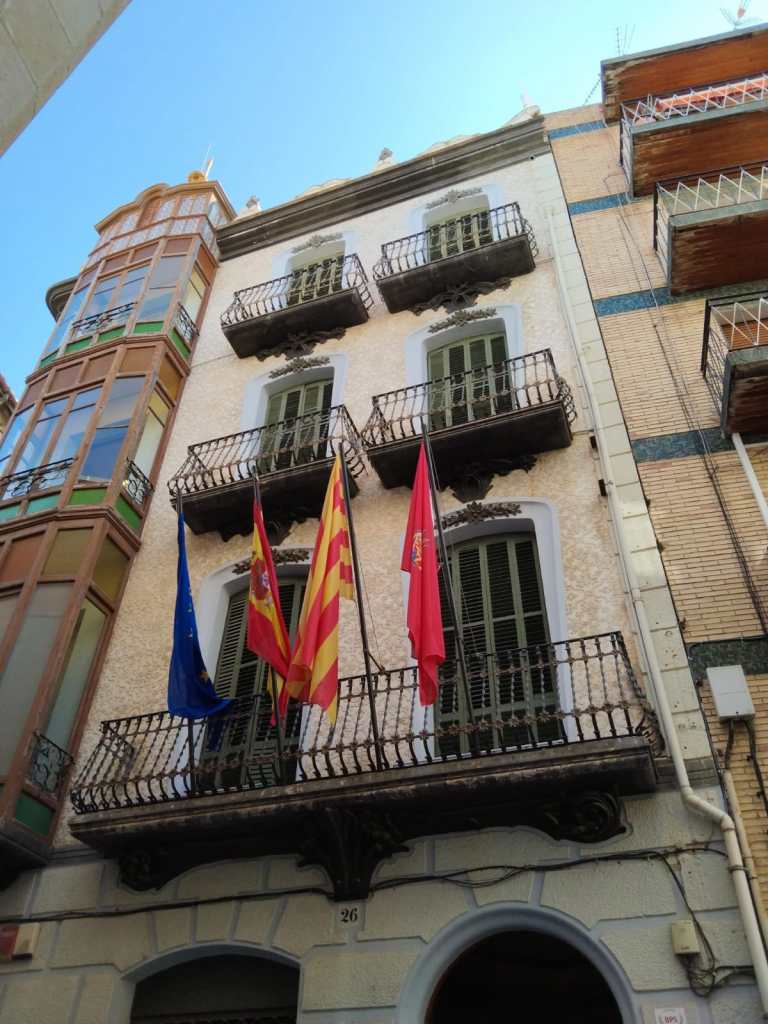
As we turn another corner, squeezed into the medieval maze, we come across a big surprise. It’s a beautiful art deco (modernisme style in Catalan) house, right in the middle of an ancient street. It’s Casa Grego and was built as a fancy family house back in 1910. I love it! It’s my favourite type of architecture and something surprising in this old city. As we walk on we find another, and then another. This is a city of contrasts!
Casa GregoMore modernisme
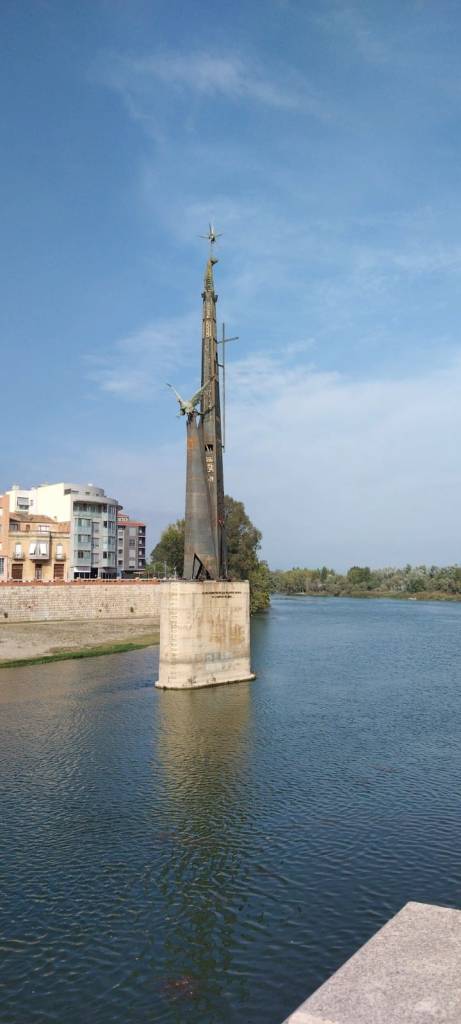
Finally we turn the corner of the street again and we are back at the river. In front of us is a huge monument made from rusting metal. Dad says it’s the memorial for the people that died during the Spanish civil war in the 1930s. He explains that Spain was divided into supporters of the facists lead by General Franco and the nationalists. People who lived in the countryside didn’t get the option of who to support and they had to follow the local government supporters. In the cities there was a lot of fighting and Tortosa was the site of one of the bloodiest battles in the war. Even though underground shelters were built, which you can still visit today, thousands of people died. Franco eventually “won” and he controlled the country until he died in the 1970s. Apparently no one knows exactly how many people died in the civil war but it is estimated to be around a million.
Civil War Memorial
The memorial in the river was put up by Franco in 1960 and is made from the metal of the bombed bridges. After his death the Catalan people repurposed the monument to commemorate everyone that died in the war, not just those fighting for the facists.
This scares me and now I understand why we had to leave Hungary and my brothers and sisters. It’s scary how one man can breed such hatred and have so much control and I feel sad that my birth country is moving towards a horrible dictatorship where anyone who doesn’t agree with the government or is “different” can be eradicated.
It’s been an interesting adventure. My little legs ache and I need a snooze. Learning about the past was good but hearing about the war is scary. Now I wish the leaflet I found was for a tortilla recipe. I’m hungry now!
So I’ve not written much for the last week because I’ve been resting my paws from all the walking around. I’m sure all this exercise isn’t good for you, especially when you’ve only got little legs. When we get home I’m definitely going to have a rest! If Dad says it’s time for a walk in the olives, I’m going to pretend to be asleep!
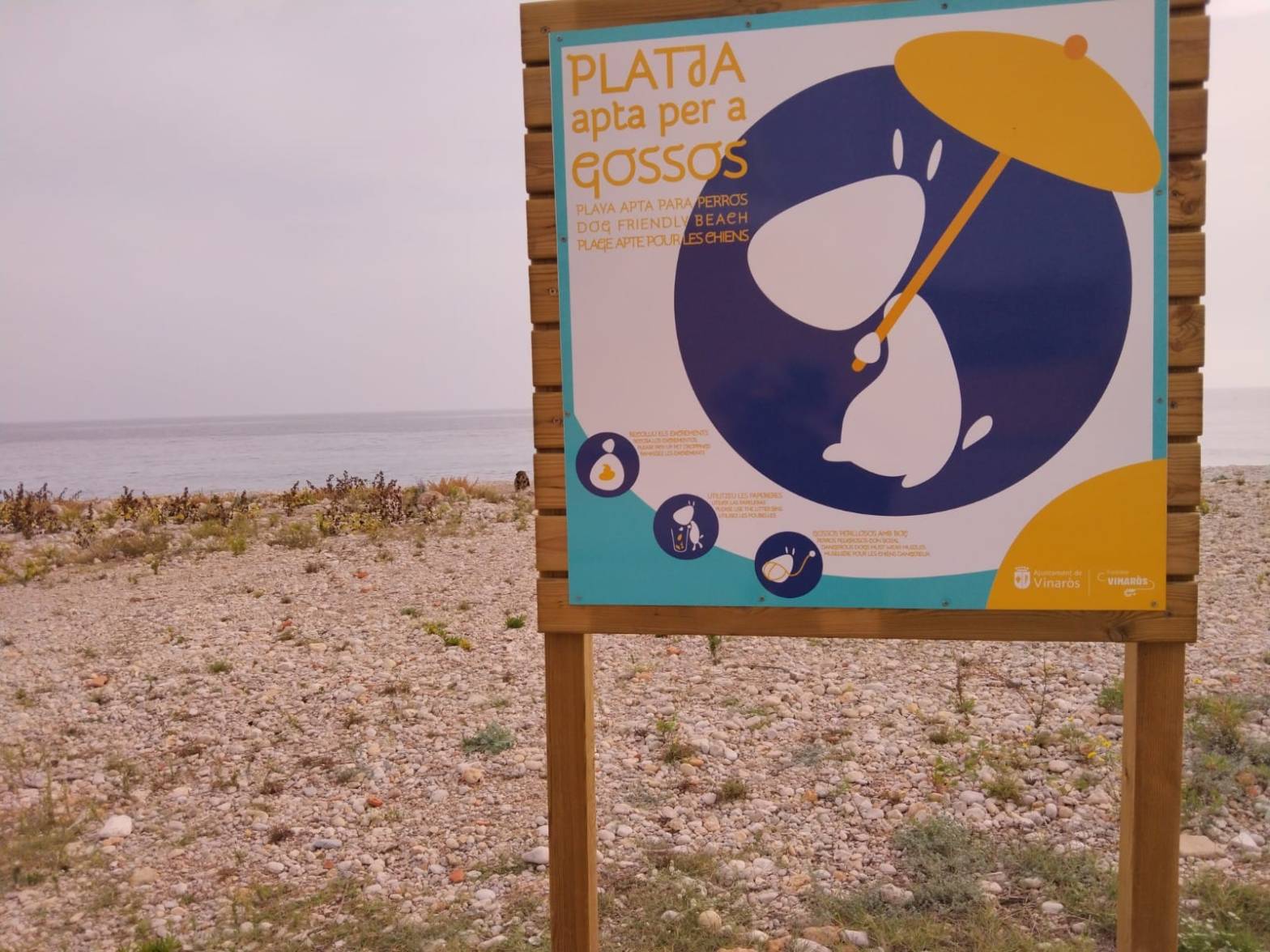
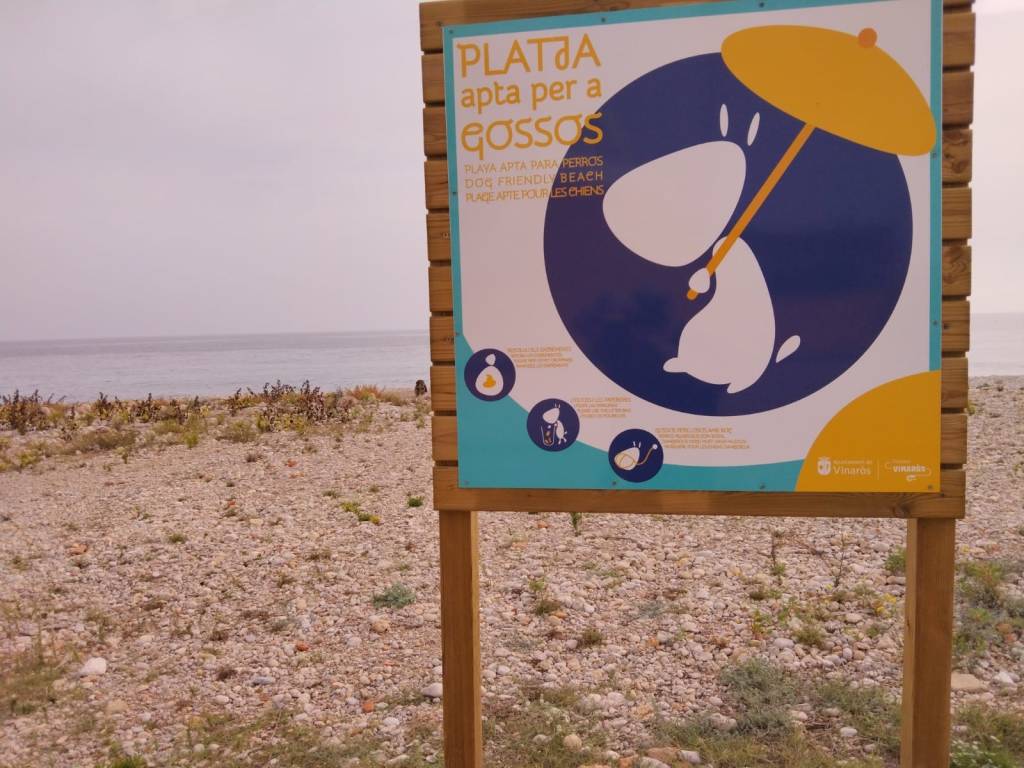
The other day we all decided that we would havae a nice, quiet relaxing day. A little trip to the dog beach and then a snooze. Vinaros is another town about 20 minutes from here and it has two dog beaches to explore. Yay! Off we set in the car and we were soon at the first beach.
Vinaros Dog Beach – Mark I
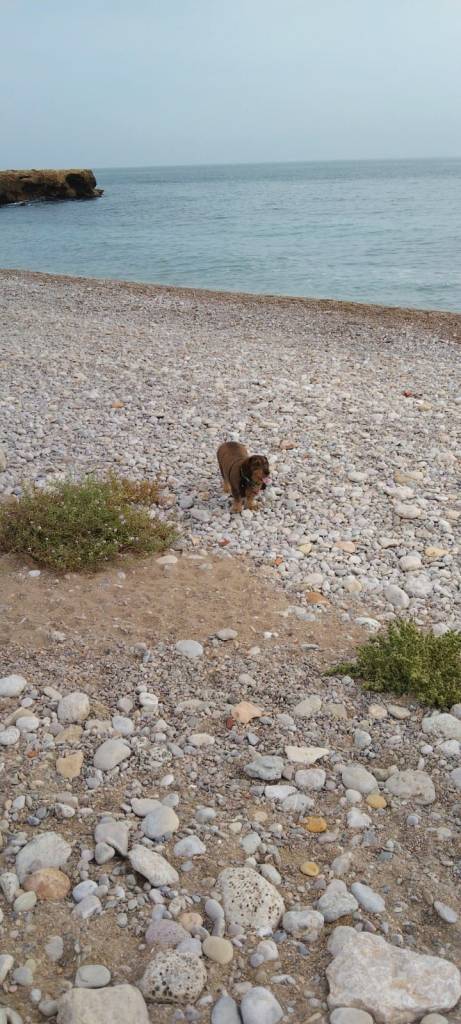
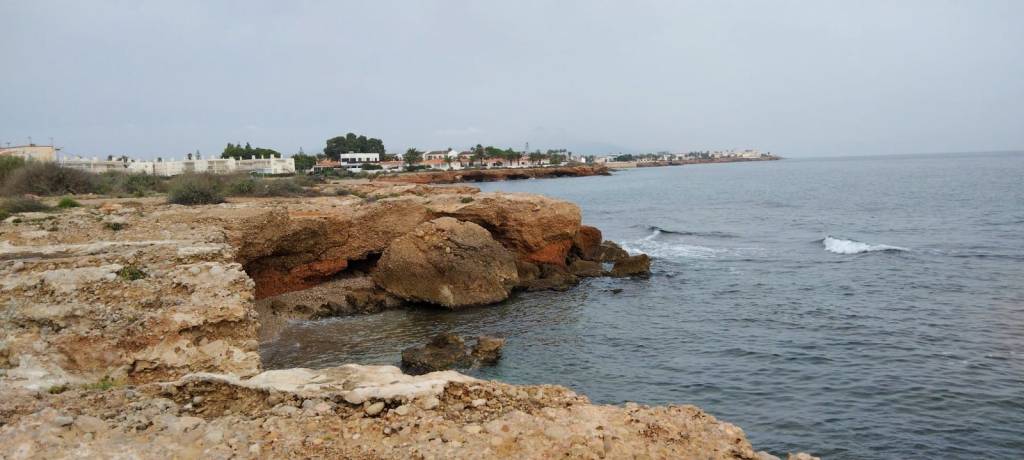
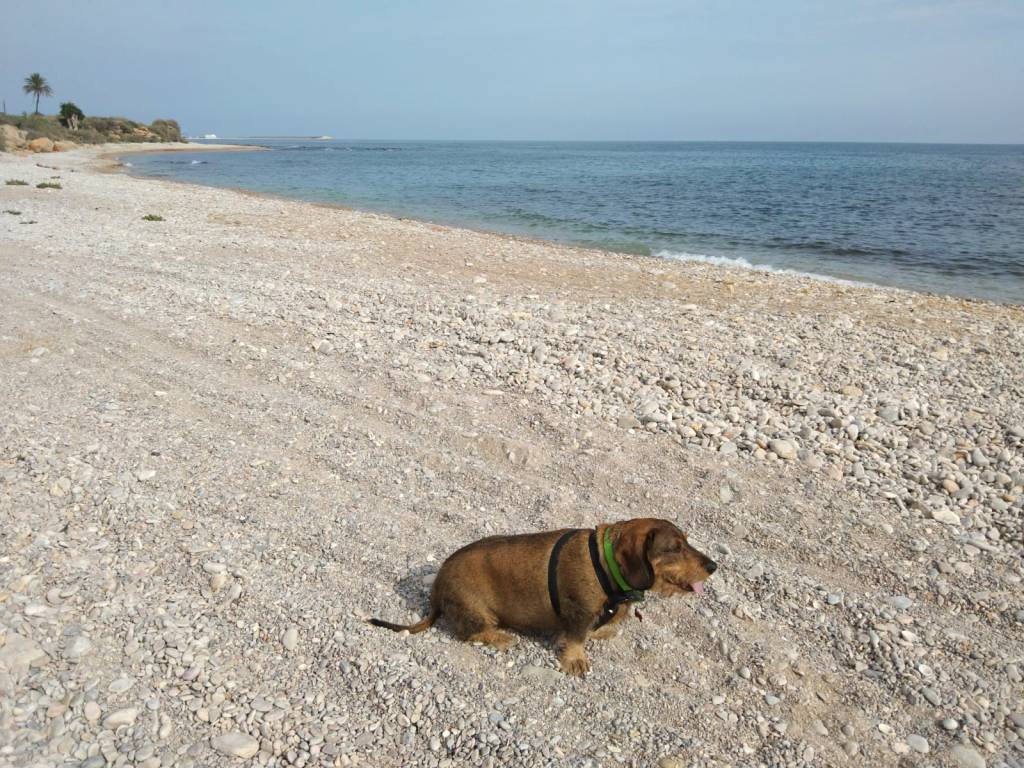
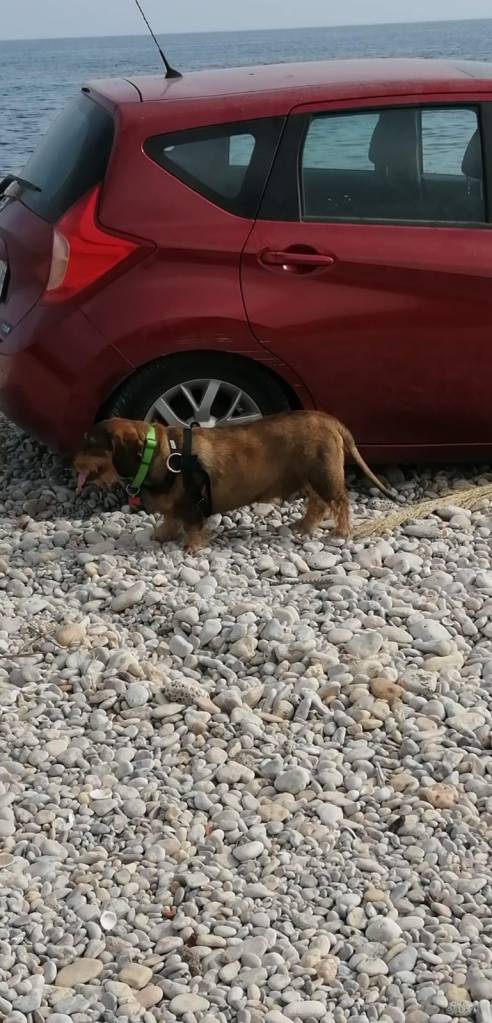
Hmm disappointment! There are miles of lovely sandy spots along this coast and the local council decided that us doggy visitors only deserve a really rocky beach. Dad said it was worse than Brighton beach and he should know as he comes from there! The pebbles were large and, well, pebbly and it was difficult to walk on. The sea got deep really quickly as well. As it’s October there were only a few other doggy friends there but noone was impressed. Not even a rubbish bin to put used poop bags! Yuk!
Not much fun on the pebbles!
There was a little viewpoint just a few minutes walk away and that was nice. It’s called a Bufador in spanish and it means a blowhole in the rock where the water splashes up when it’s rough. We spotted the hole but luckily it was a calm day so no buff-ing today!
View from the Bufador
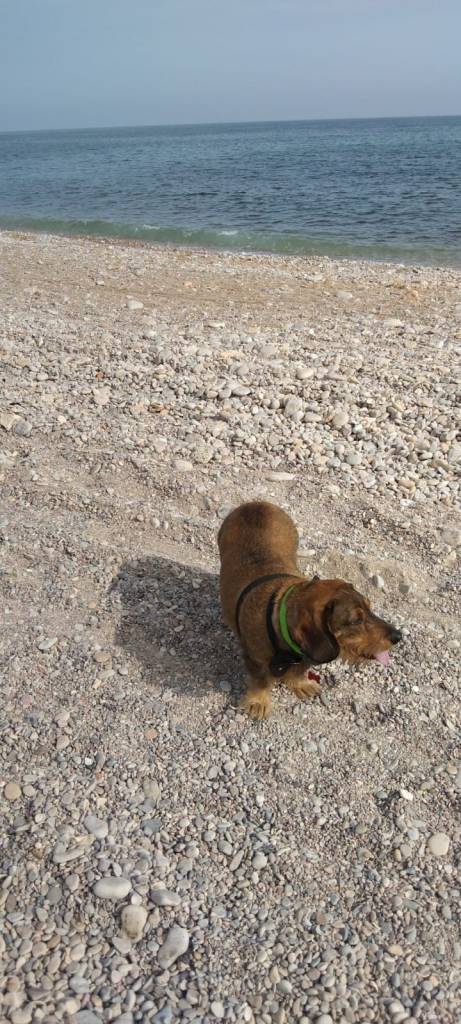
Back in the carand off to find the second beach. The SatNav said it was just along the coast and after following a narrow road right next to the sea, we found it. Much nicer than the last place. The Platja de Aguiadolivas was another pebbly beach but much easier to walk on with lovely crystal clear water and much shallower. I liked it! It was quiet and apart from one other German family with their pooch it was only us.
A nice spot to relax
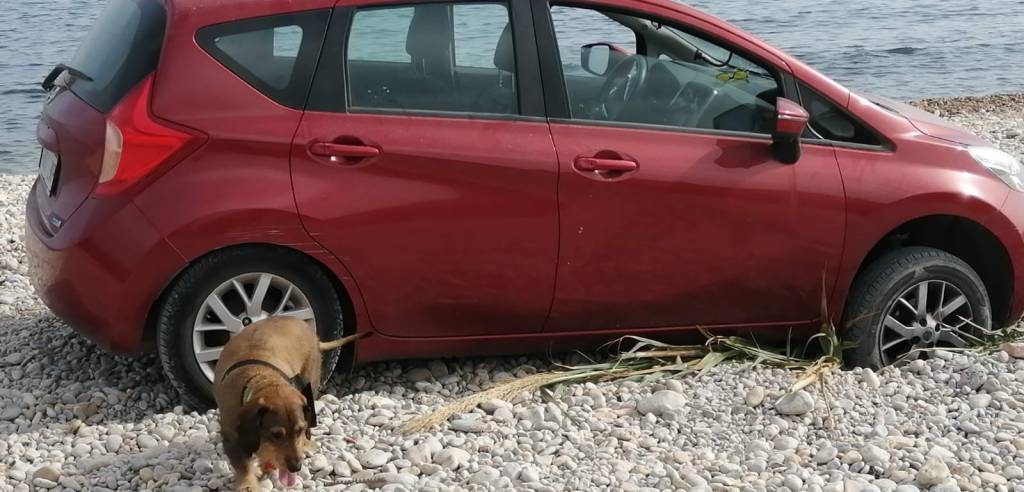
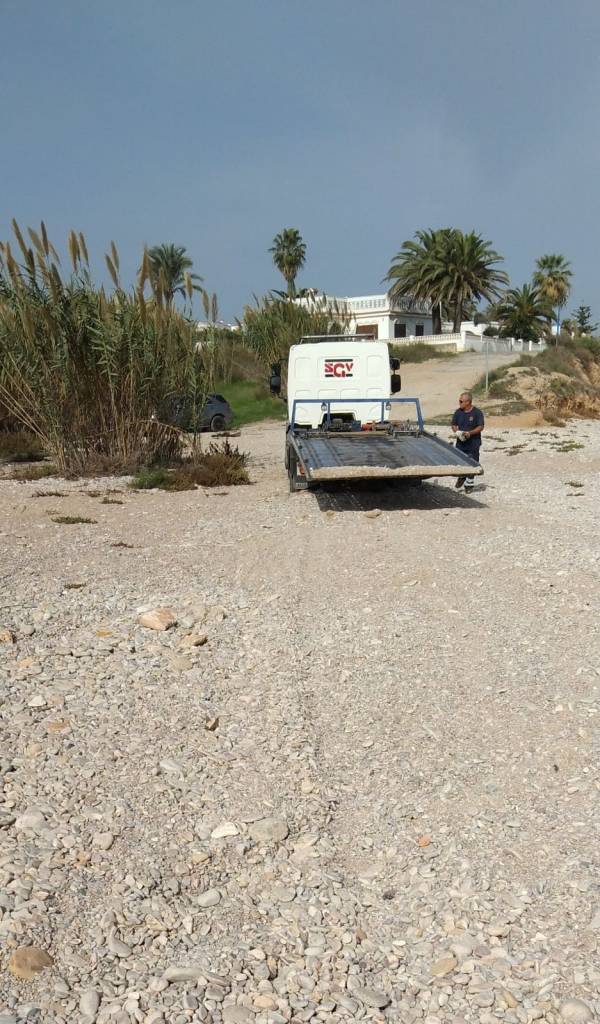
The Sat Nav said we needed to drive across the beach to reach the road back home. It looked a bit stony for our little car but we could see tyre tracks passing in front of us and, apart from a very small sign saying soft road surface, everything seemed fine. We stopped and looked at the way ahead for a while deciding if we should go or not. Finally we chose yes and off we went. Wow what an adventure driving on a beach, the sea on one side and a pond on the other! This is fun I thought as we trundled across the pebbles. Oh! Why are we stopping Dad? Is it because we are stuck? Oops! We all get out and look around the car and yes the front wheel has sunk in the sand we are are, well, stuck!
Well and truly stuck!
After a lot of big words that I don’t understand (luckily), we all start to try and dig the stuck wheel out! We use our old Hungarian number plate which is still in the boot after we changed the car to Spanish, Dad goes off to look for old palm branches to put under the wheel and I did with my paws!
After about half and hour we are still stuck so Dad decides to ring the rescue service. They understood the problem and found where we were and said the rescue van would be about 20 minutes. Great I think, time for a bit more exploring on the beach and even a snooze when we get back.
More exploring!
The breakdown truck arrives. It’s big! No problem the driver says as he backs down onto the beach and unhooks the tow wire. Dad fixes it to the towing ring on the car and we’re ready to go. The truck driver pulls the wire tight. Soon be on the move again I think and ….. the wire breaks as the rescue truck sinks into the sand too! Duh! More time to explore I think. What an exciting day!
Rescue at last!
After another hour a second tow truck arrives who now needs to rescue the first truck and us! He seems to know that it’s not a good idea to drive onto the beach so he stops on the road. Out comes another tow cable and eventually the first truck is free. The two drivers stand looking at our car, trying to decide what to do. By this time there is quite an audience watching the excitement. I suggest we sell tickets!
The truck drivers decide to connect two long wires together and then drag us off the beach. After lots of complaining and huffing the wires are connected. Ooops! Guess what! They aren’t long enough! Are we ever going to get home I ask myself!
Will we ever get home?
Luckily the nice German man is still on the beach and he offers an extra towing strap to connect eveything together. Dad hooks the wire onto the towing ring and the wire goes tight. Finally we are moving! Slowly but surely we slide along the beach until we reach the car park. Rescue time 5 minutes – total time on the beach 3 hours!
Moral of the story and our little trip to the dog beach – don’t believe the SatNav and if it looks too stony, then it probably is! Let’s go home now Dad – but the long way back please!
We’ve decided to go exploring today and of course it involves my favourite transport – the car or as we call it here in Spain coche. But today I’m confused because Dad says it’s called cotxe! Only for today though because we’re going to Catalonia and apparently they don’t speak Spanish there – it’s Catalan! Just when I thought I’d got the hang of things.
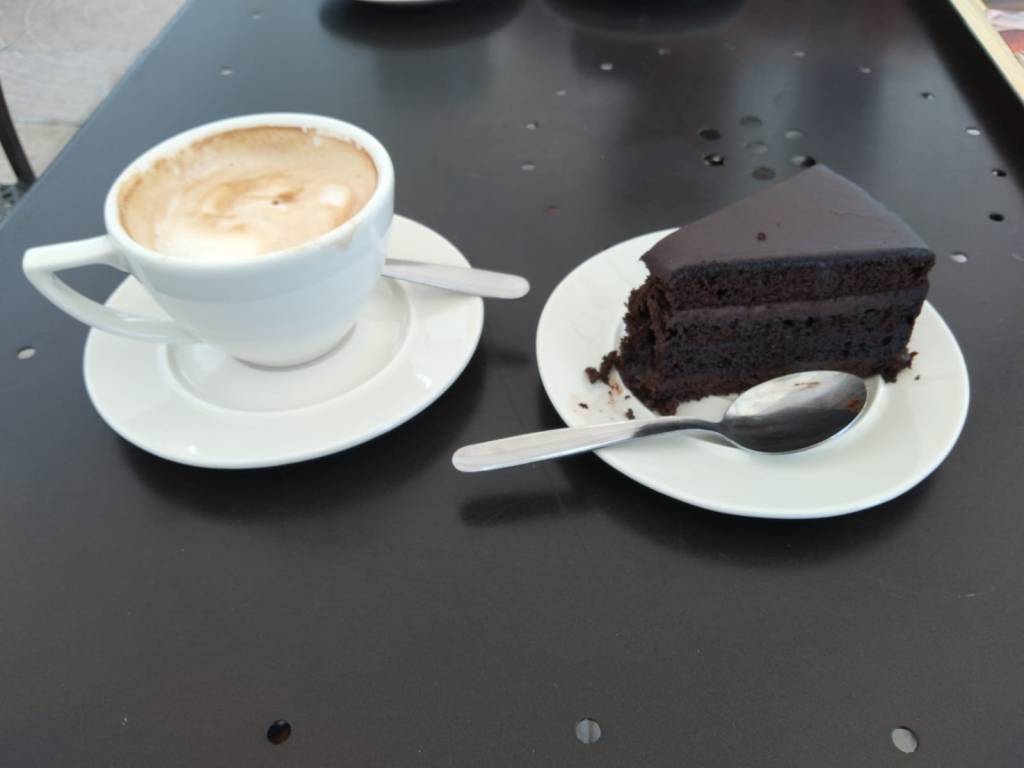
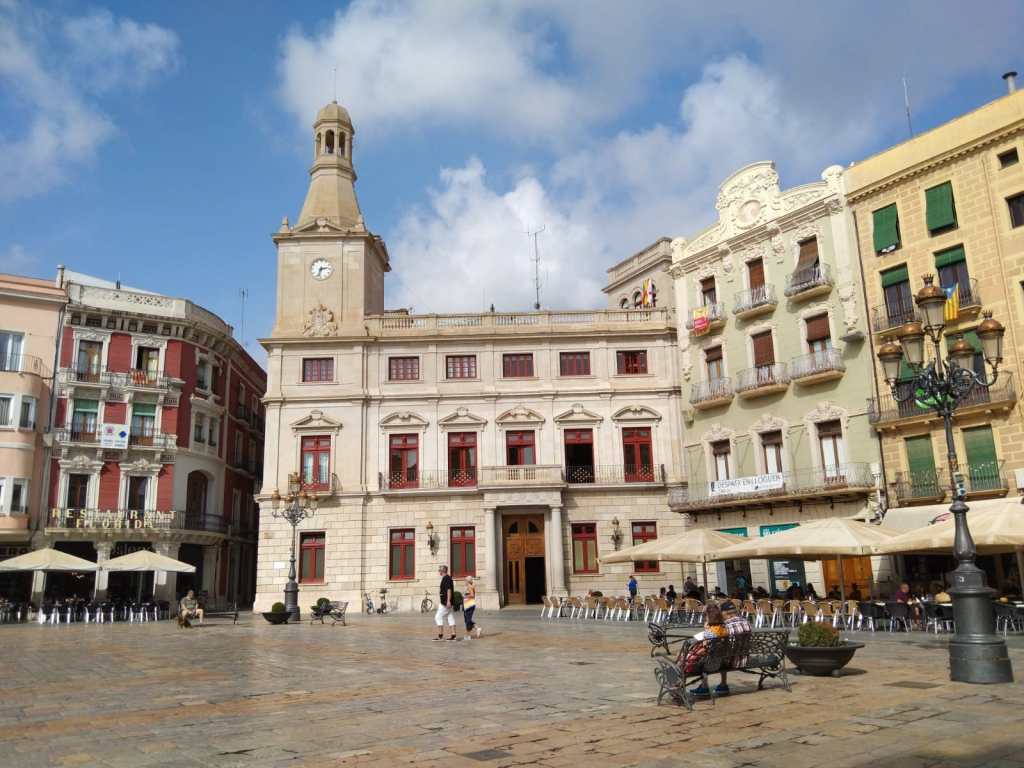
So we are soon whizzing up the motorway and in just over an hour we arrive in a place called Reus. This old town is between the mountains and the sea and is famous for wine making and liquors. Sounds yummy to me but Dad says I’m too young for tasting so I have to make do with a bowl of water while they have coffee in Prim Square.
Coffee for them – water for me!
Most people only know the town because of the airport that has low cost flights to the UK. However people have lived here since Roman times and the name actually means Roman Prison! I’m glad I wasn’t around then as it doesn’t sound like much fun. The town was small until the 18th century when the liquor production really took off and the town expanded. At that time it was the biggest liquor producer in the world, even bigger than Paris and London.
The other thing that Reus is famous for is it is the birthplace of modernisme art. At the start of the 1900s Art nouveau was the big fashion and Spain was also part of the craze. Each country had it’s own take on the style but Spain was a bit different. I’ve always thought of Spain as one country but in fact it is a complex mix of 15 seperate regions, each with it’s own style, culture and, in many cases dialect or even language. Catalonia is no exception and the modernisme style brought it’s own uniqueness.
Plaça del Mercadal
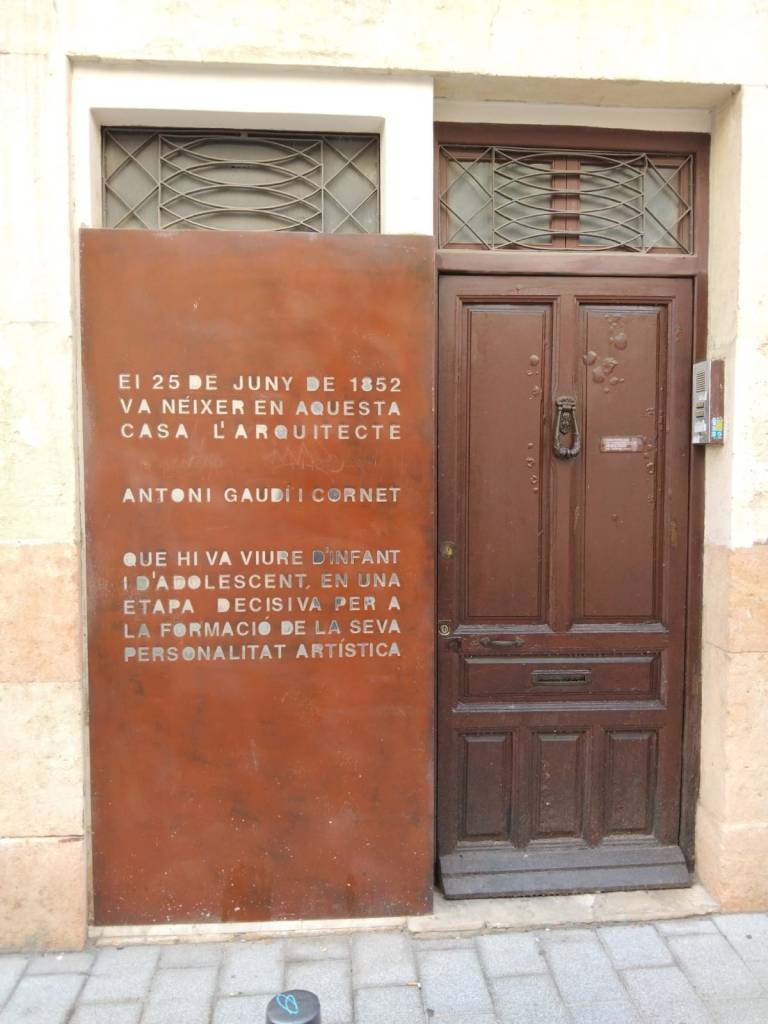
One of the greatest artists of the time was Antonio Gaudi and he was born in Reus in 1852. As we walk through the narrow streets of the old town, we find the little house where he was born into a family of coppersmiths. Although there are none of his designs in the town – he worked mainly in Barcelona – the modernisme style can be seen everywhere. It contains the symbols of the region, culture and language which were all banned at the time and are displayed in the designs of the unique buildings.
Gaudi’s birthplace
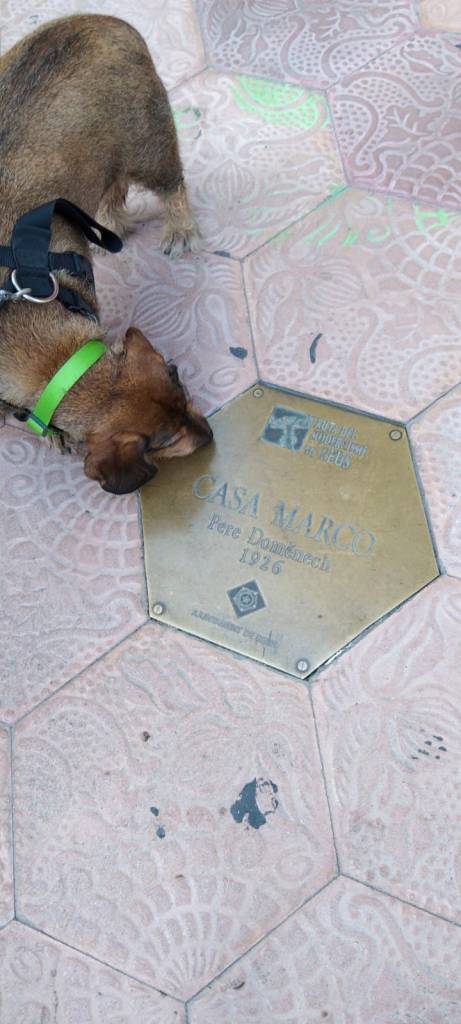
The streets in the old part of the town are narrow and cobbled but nearly every house has been designed by a famous architect of the era. Plaques in the floor in front of the buildings state the architects name and the dates of the buildings. I wonder how many dogs have sniffed around these streets!
Who designed this one?
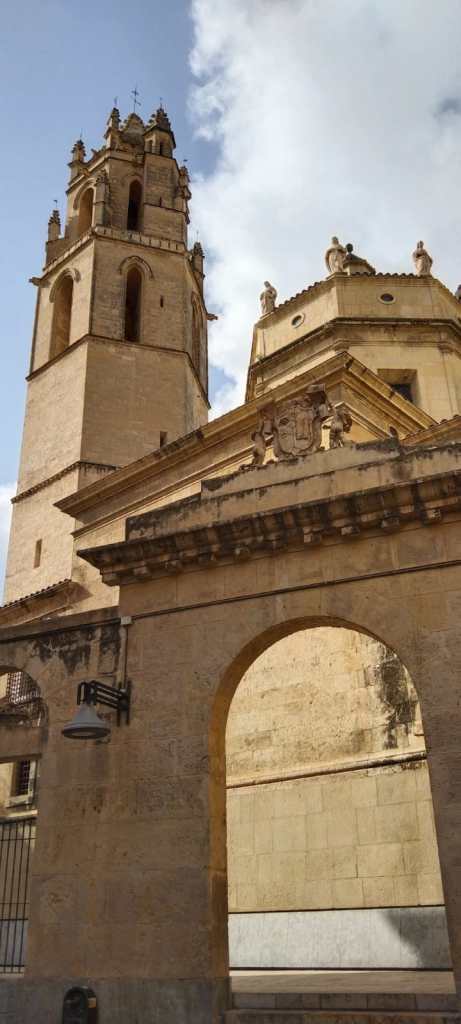
We reach the church that has been standing since the 13th century. It’s one of the few buildings that don’t have the modernisme influence. However the sign outside says that Gaudi used the spiral staircases in the tower as inspiration for his most famous work in La Sagrada Familia church in Barcelona.
Inspirations
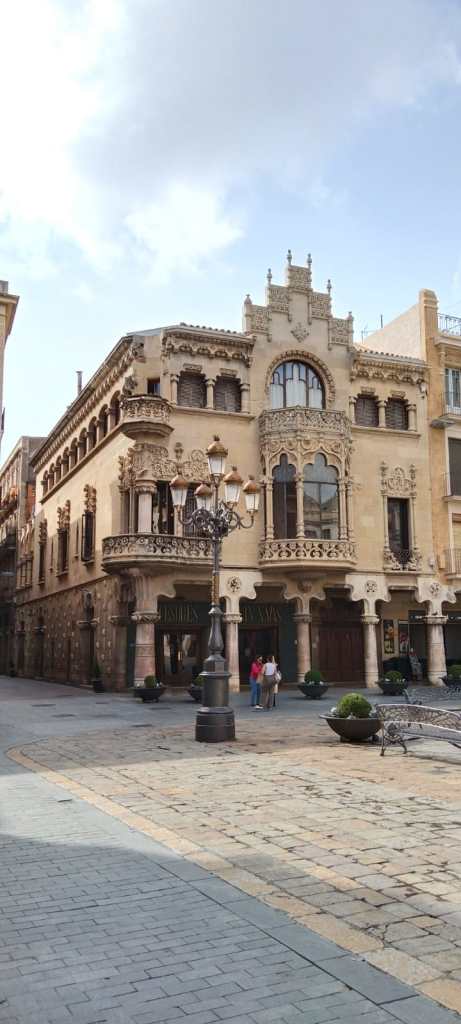
As we stroll back into the Plaça del Mercadal, we stop to admire the beautiful Casa Navás. It’s so grand I think it must be a government building but I am wrong. It was built in 1901 as a private house. Wow! Too grand for me!
Casa Navás
I spot a little stone marker in the floor of the square that says tronada. I ask Dad what it means and he says it’s a Catalan word for storm but in fact it marks the spot where the famous Saint Pere celebration takes place and where a huge display of fireworks takes place. I hate fireworks so I start to make a run back to the car – I’m not taking any chances!
Tronada! Not for me!
I love Reus. Not only because it’s the birthplace of my favourite designer – I might ask for a Gaud designed dog bowl for Christmas! – but the people here are proud of their heritage which has been repressed and even banned for so many years. Catalan is a beautiful and unique language and I’m an honoured dog being able to experience something so unique, even if it was only a day.

 A Dog's Travel Adventures in Spain (and other places too!)